
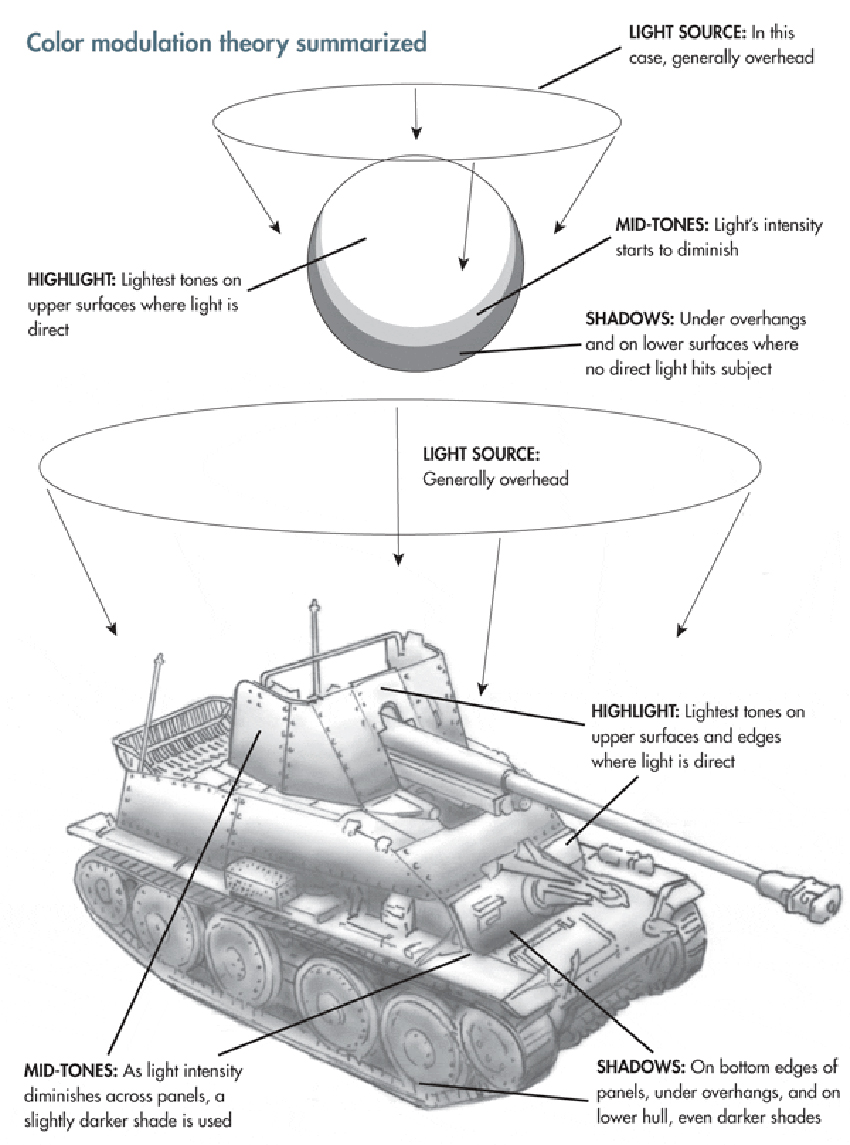





Coined by master modeler Adam Wilder, the term color modulation is only a few years old. But the concepts of depicting light through paint are often ascribed to works of the Baroque Era by masters such as Rembrandt, who is especially famous for it.
Fortunately for those of us who have trouble drawing a good stick person, you don’t have to be an artiste to employ color modulation. And though there are now whole paint sets comprising various shades in a complex application of the technique, a simplified application of color modulation also can be effective.
Whether you use more than a dozen paint shades or just two or three, color modulation can subtly enhance your finishes. It is especially useful in varying a monochromatic finish, simultaneously highlighting details and providing a scale effect.
Once you get the hang of it, you can make your color modulation as elaborate as you like to achieve myriad results. But let’s try the easy way first.