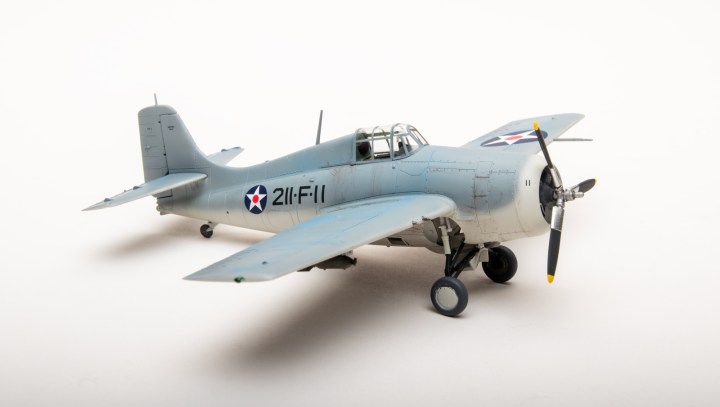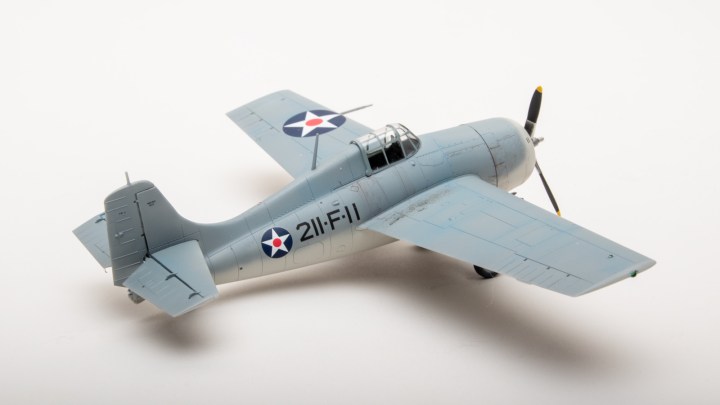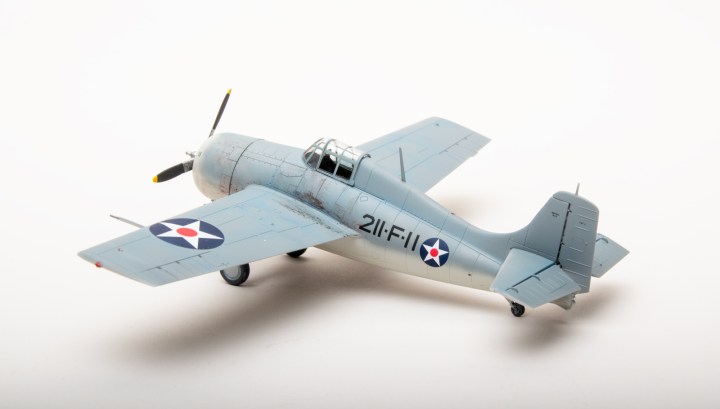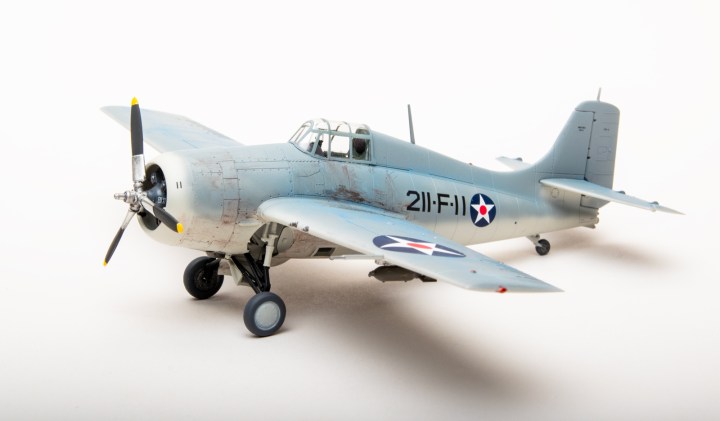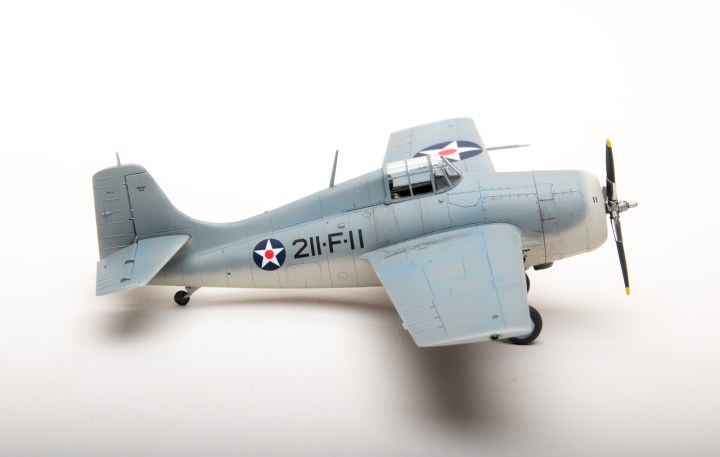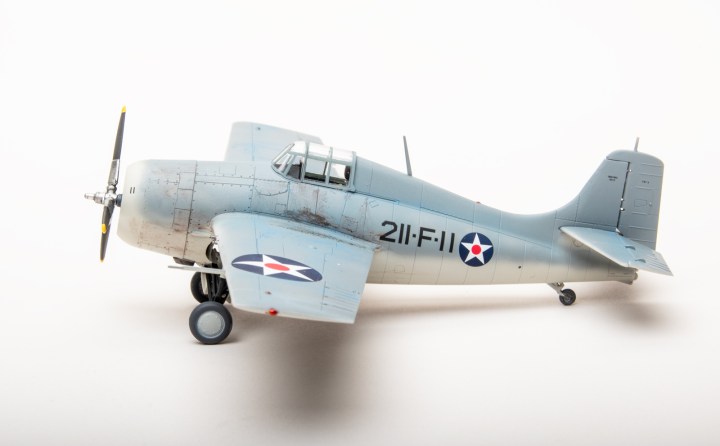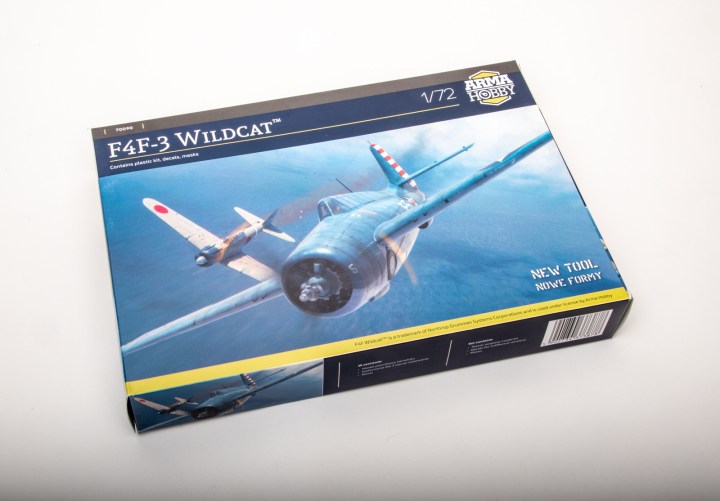
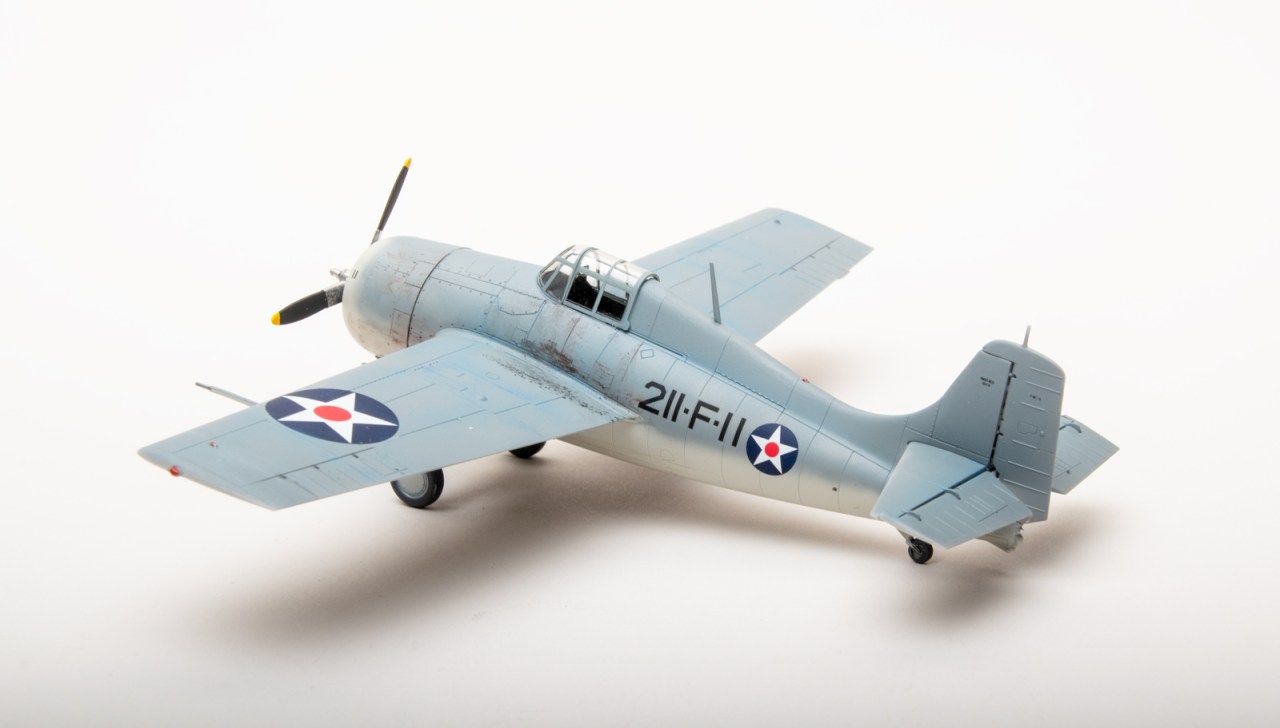
The F4F-3 Wildcat, the first service version of Grumman’s portly fighter, was one of the unsung heroes of the early part of America’s involvement in World War II. It held the line from Pearl Harbor until replacements started to fly in just prior to the Battle of Midway in June 1942. The U.S. Marine Corps fought the battle of Wake Island with the Wildcat, and the all-new Arma Hobby 1/72 scale F4F-3 Wildcat plastic model kit includes markings for one of those fighters.
Arma’s kit shares much with its earlier F4F-4 and later FM-2 kits, but it has all the unique features that make it a true “dash three,” like non-folding wings and a selection of cowl rings with correct intercooler scoops.
The fully detailed interior fits together like a jigsaw puzzle. I installed the painted cockpit in the left fuselage along with the firewall. Once this had set, I added the entire main landing gear assembly piece by piece, with suitable drying time between additions. This allowed accurate placement of the many detailed — and fragile — components.
Before closing the fuselage, I laid down the decal seat belts onto the seat — although I simply cut them out rather than apply them as decals to give them more depth. As a result, I opted for a closed canopy, which fit perfectly.
The engine paints up well and includes 10 decals. I applied the more prominent ones and called it done.
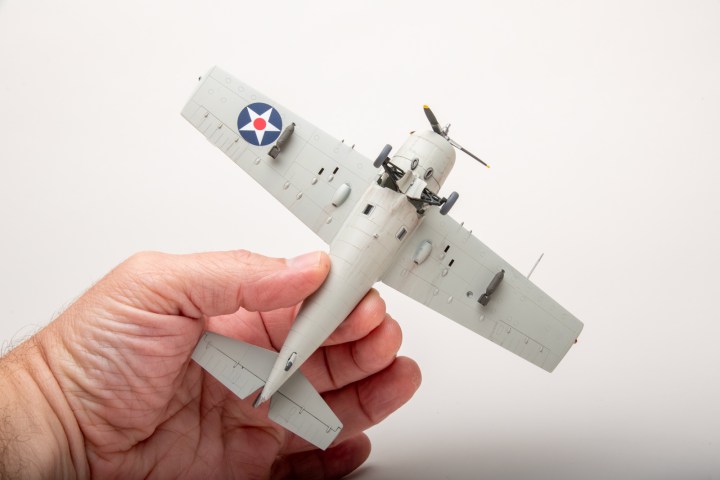
The fuselage and wings assembled with no issues, but be aware there is a trim tab on the right aileron that appears to be flash it is so thin; it is not flash. Also, remember to open the holes for the bomb racks if your selected scheme carried them.
The stabilizer came as a single piece and slotted into place, which was handy for keeping everything level. An incorrect detail from the later version kits is present and unmentioned in the instructions: the tie-down points for the bars that hold the folded wings in place are on the leading edge of the stabilizer. They should be removed for the non-folding “dash 3” version.
Based on a photo of the Wake Island airframe after the battle, I modified the kit’s painting instructions to show an overpainted, worn walkway on each side instead of the pristine decal walkways. The same photo showed this airframe was one of the F4F-3s that had bare-metal cuffs on the propeller. The kit decals went on without drama.
I spent a little over 12 hours on this feisty feline, and I am very glad Arma Hobby has acknowledged the importance of the early F4F-3 Wildcat by adding a 1/72 scale kit to its extensive line. It requires only that you take your time with the complicated, delicate landing gear for a great result.