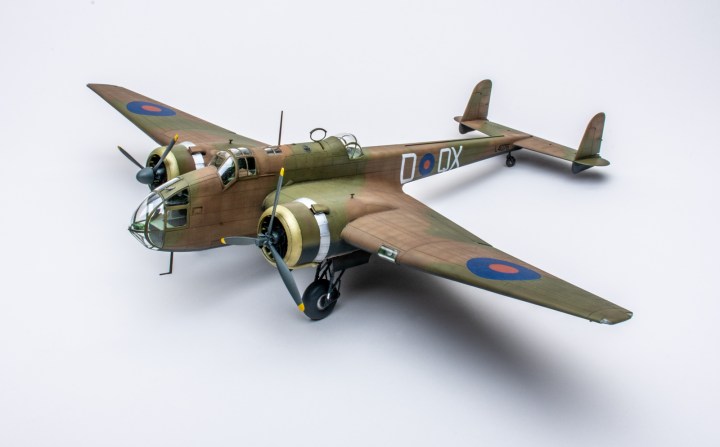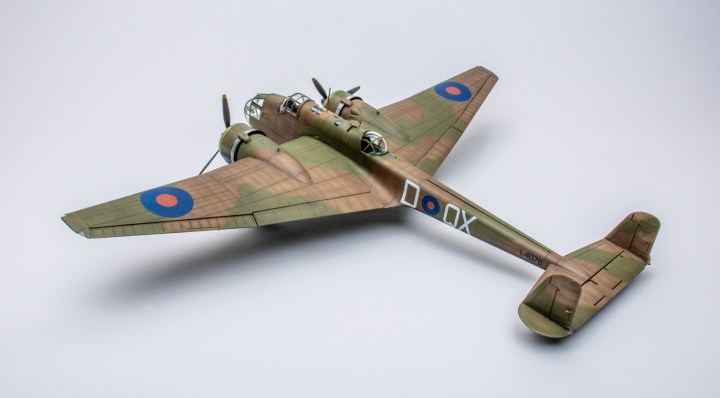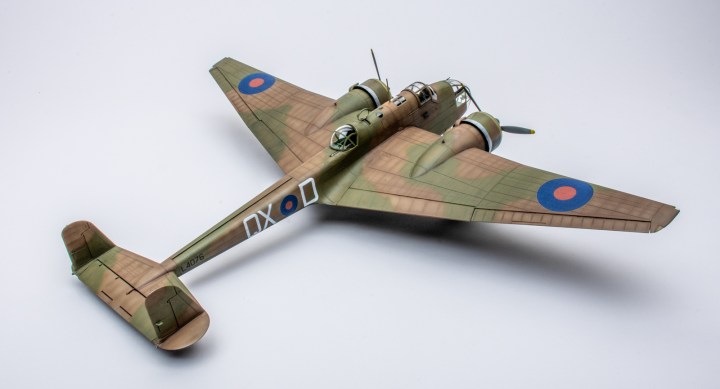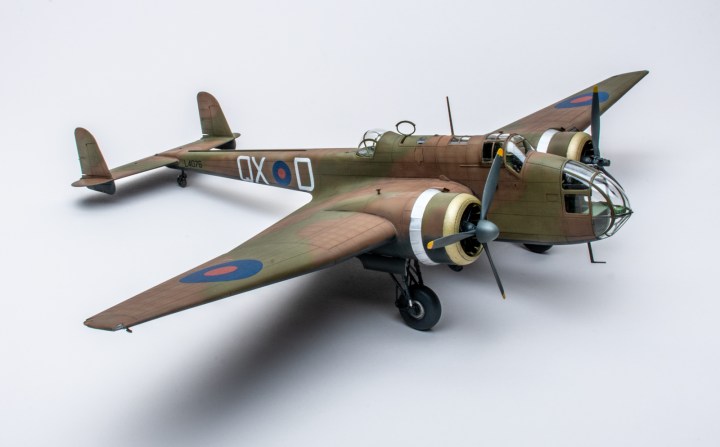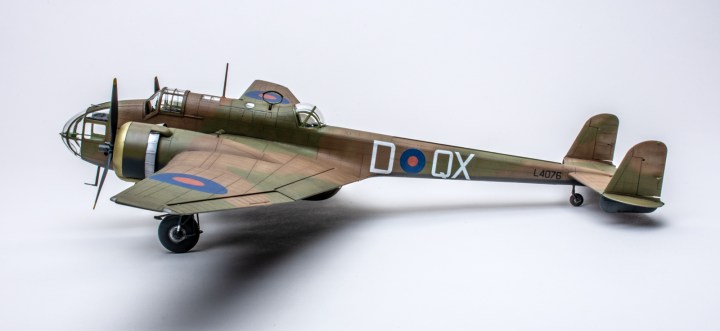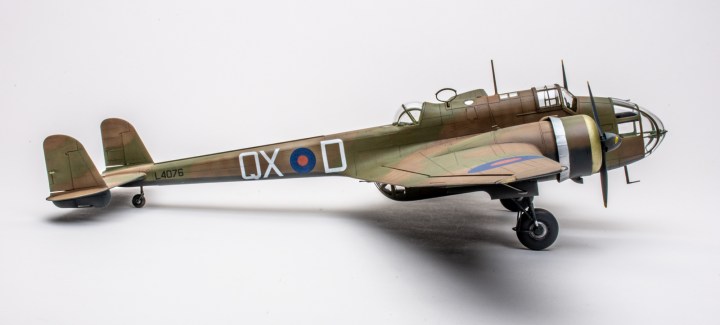
There is an old saying among aircraft modelers: “If it’s weird, it’s British. If it’s ugly, it’s French. And if it’s weird and ugly, it must be Russian.” But what about funky-ugly, something just weird enough and just ugly enough that it becomes beautiful? With a fuselage that looks like it should be an attack helicopter and its long angular wings, the Handley Page Hampden fits that last category. Even though I knew nothing about the airplane, I had to build one.
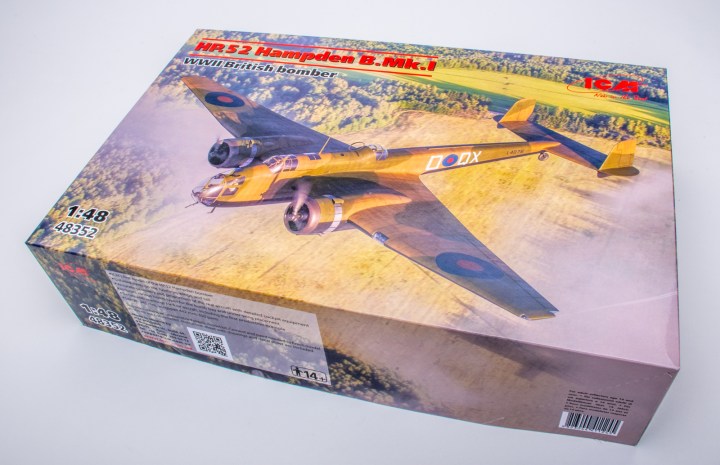
The new ICM 1/48 scale HP.52 Hampden B.Mk.I plastic model kit fits right in with the company’s concentration on twin-engine aircraft.The Hampden, consists of nearly 500 parts on eleven gray sprues. Three of these are identical, providing the bomb load, while the engines and landing gear are on a pair of identical sprues (which also contain duplicates of the smallest parts for when the carpet monster comes calling). Excellent surface detail offers recessed panel lines and rivets. The clear parts were wavy in areas of compound curves. After painting, I did notice some unusual swirl marks under the port wing and where the trailing edge of the upper starboard wing meets the fuselage. Overall fit is excellent. The only issues I encountered were self-inflicted.
Construction followed standard procedures starting with the well-appointed interior. The kit provides decals for the pilot, bombardier, and radio operator’s instruments, although I chose to paint mine. I also omitted both the external and interior bomb load, closing the bay to preserve the Hampden’s unusual lines. I am not a fan of having to install clear parts from the inside, and I wish that ICM had molded the ventral gunner’s position as a single clear unit. Also, note that the nose gun panel (Part D42) should be offset, which is shown lower on the page in Step 36. ICM has a video on its website that I found extremely helpful during the kit’s construction.
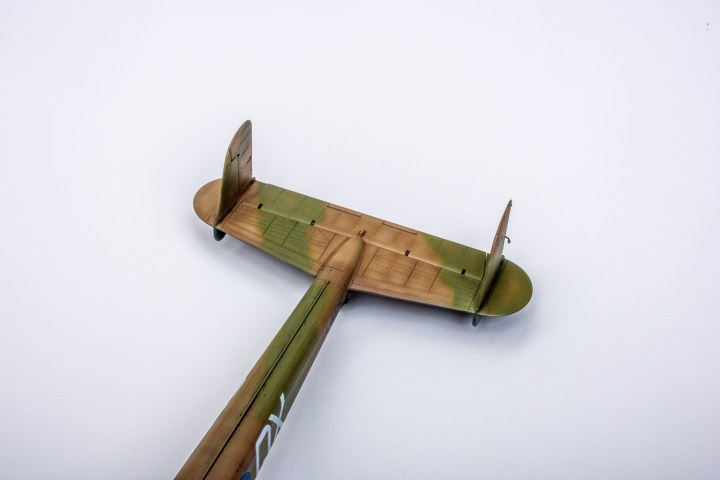
Be sure to test-fit all the tail assemblies before gluing anything. I’m not sure if it was the instructions or my error, but something went wrong. The pins on the rudders (parts C1 and C14) need to go all the way through into parts C3 and C12 to align everything. I reversed them and had to snip the pins off. There are small holes for the rudder counterweights, which go to the outside. Adjust C3 and C12 before gluing them on to match the correct rudder.
ICM has thoughtfully provided a template for assembling the sliding pilot’s hood. Mine saw service on multiple occasions as the butt joint is weak and needed repair several times.
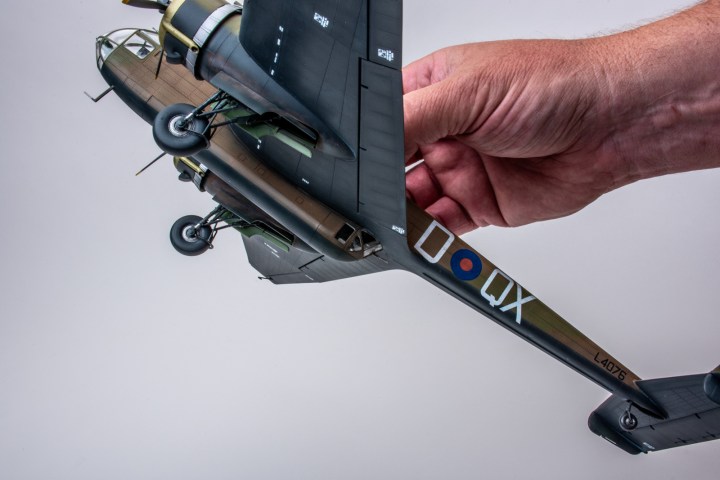
I hate installing the landing gear before exterior painting, but there is no other option because of the kit’s fidelity to detail. I did leave a few parts off to make masking easier, leading to major regret later. Part E24 needs to be installed to prevent assemblies from warping.
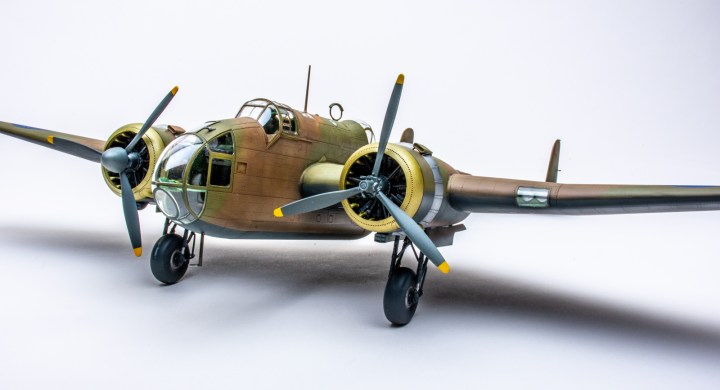
I used liquid tape to add the cowl flaps and engines and then glued the three cowl panels to the flaps and each other. Be careful not to get glue on the exhaust rings, these were put in place to ensure proper alignment. Once dry, I was able to remove the engines and the cowls, paint the nacelles entirely, add the cowls back to be sure the camouflage paint matched, then take them off again to mask and paint the cowl flaps. No matter how tempting it may be, do not glue the collector rings to the cowls until the engines are trapped inside. I installed only one of the propeller spinners to show the detail provided if you choose to leave them off.
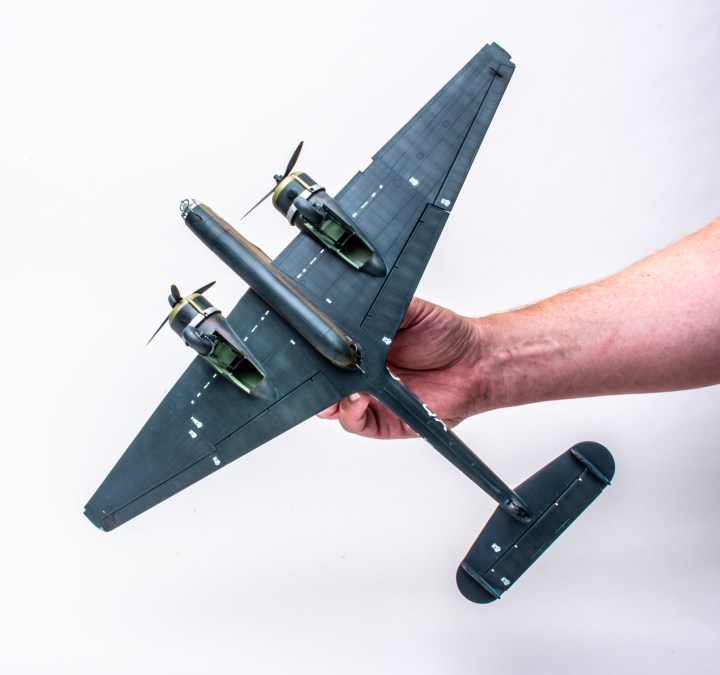
While the instructions provide templates for canopy masks, I used a set from Eduard, which fit well. ICM has some of the thinnest decals I’ve seen, although a slight white halo surrounded a few of the roundels. Strangely, only the underside stencils are provided, and no markings for the payload.
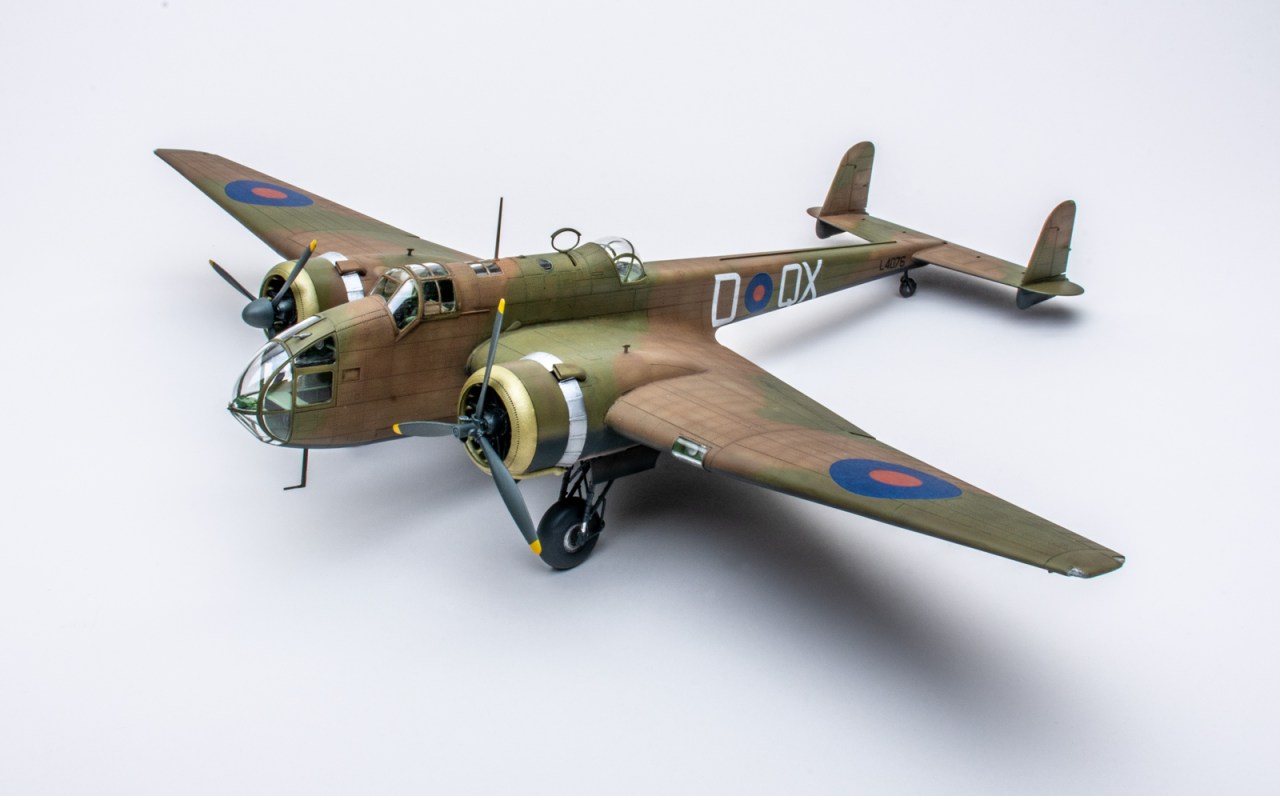
The finished ICM 1/48 scale HP.52 Hampden B.Mk.I plastic model kit scales out perfectly in length, height, and wingspan. ICM is to be congratulated for another excellent kit of a twin-engine bomber largely ignored in 1/48 scale.