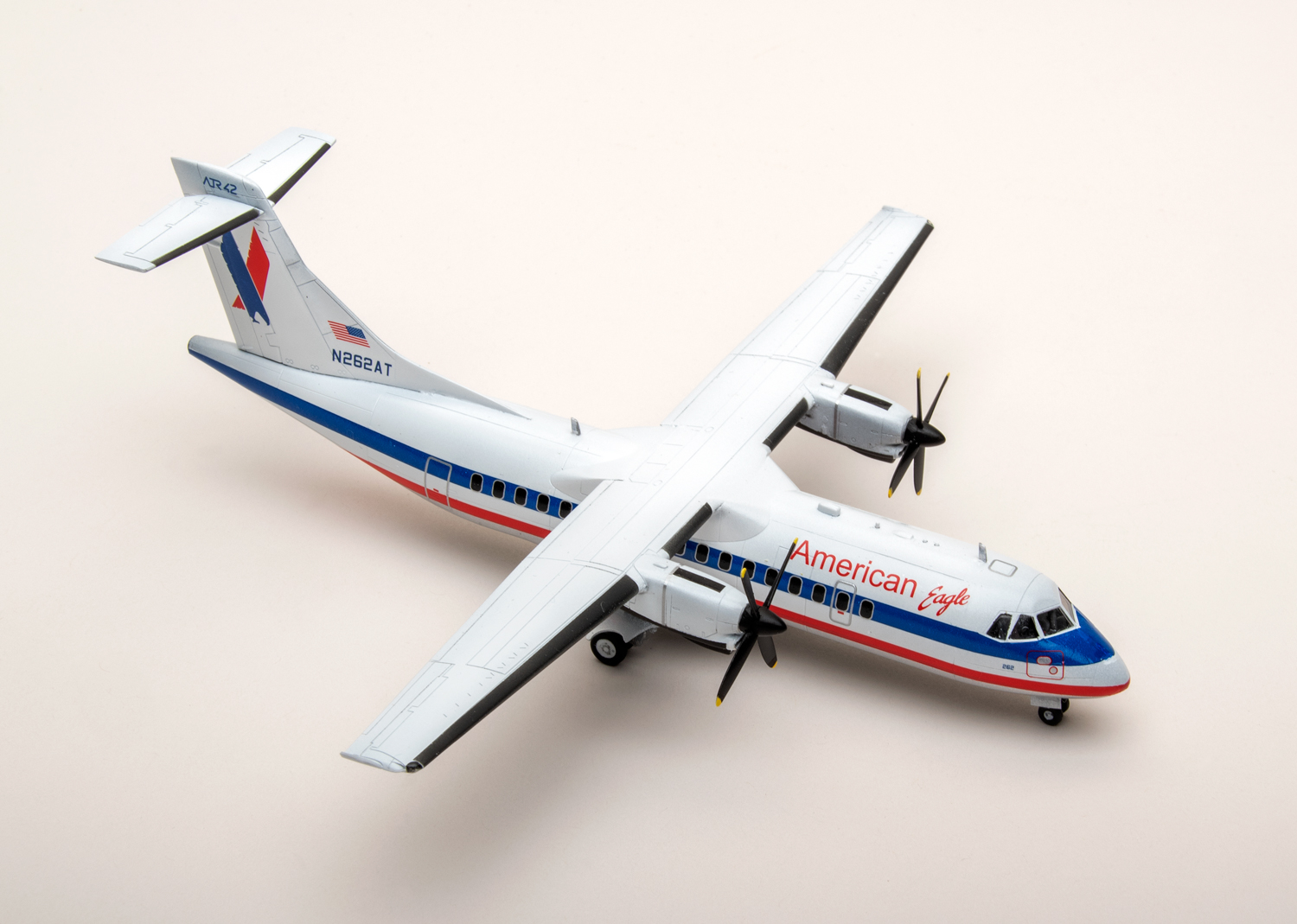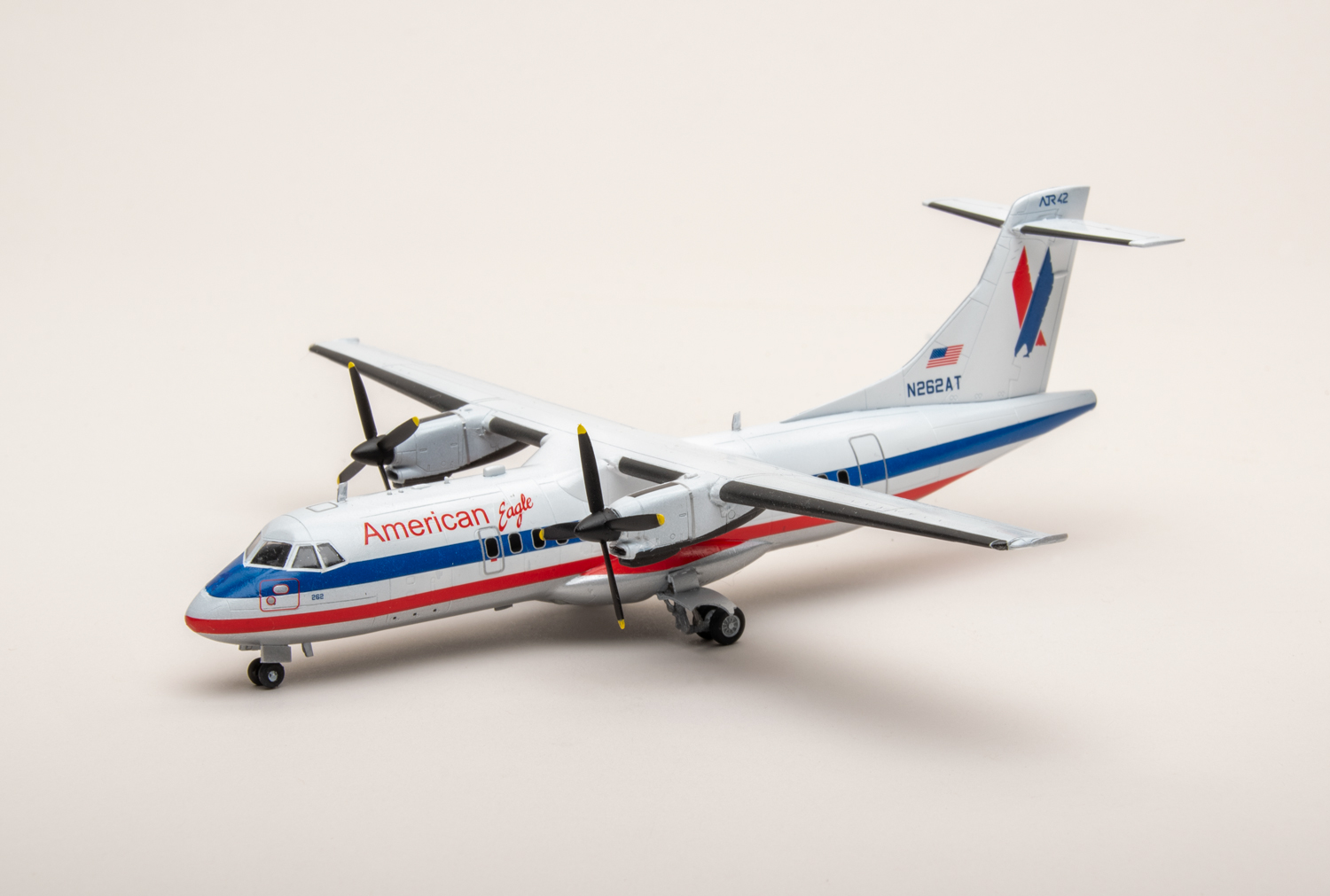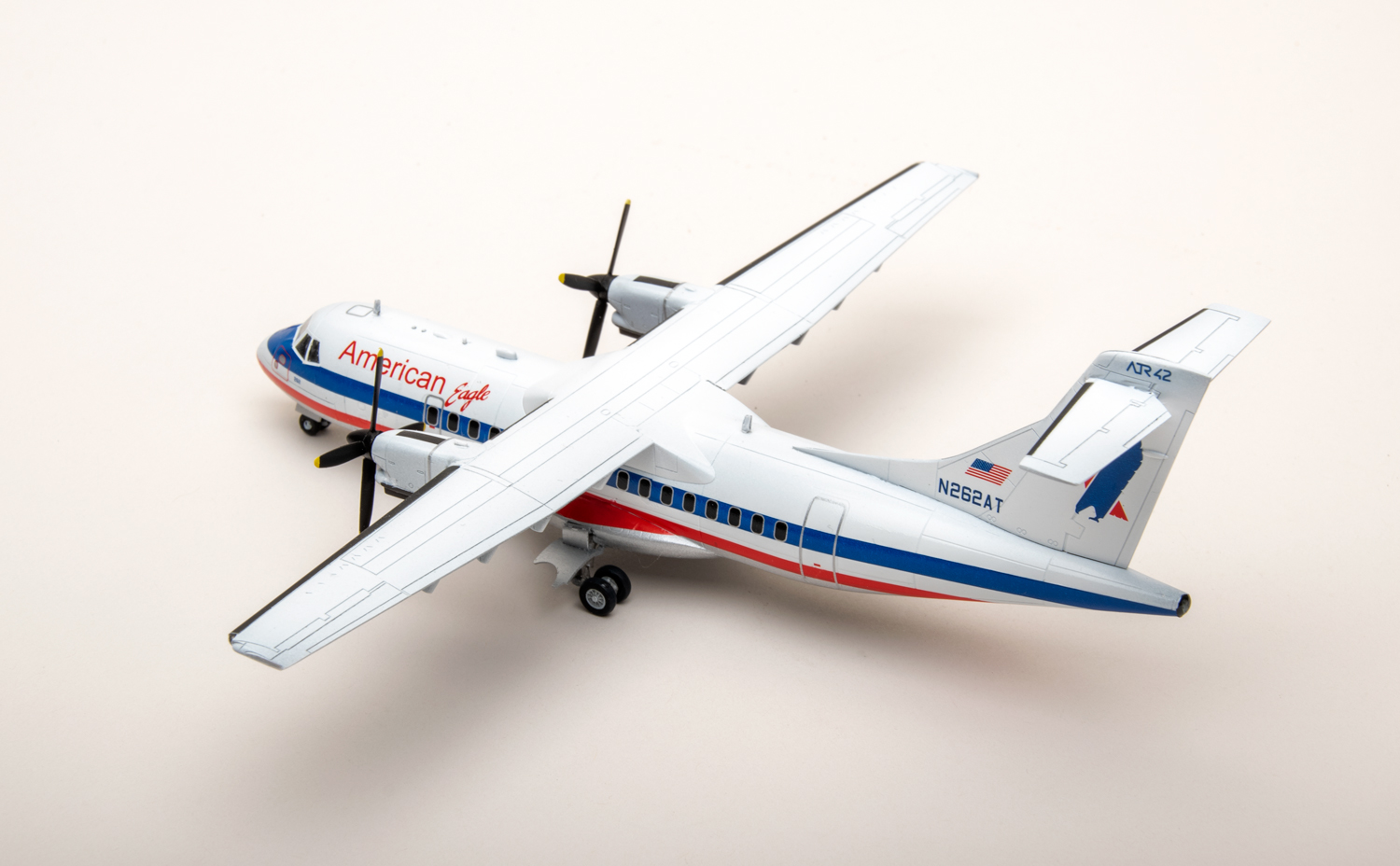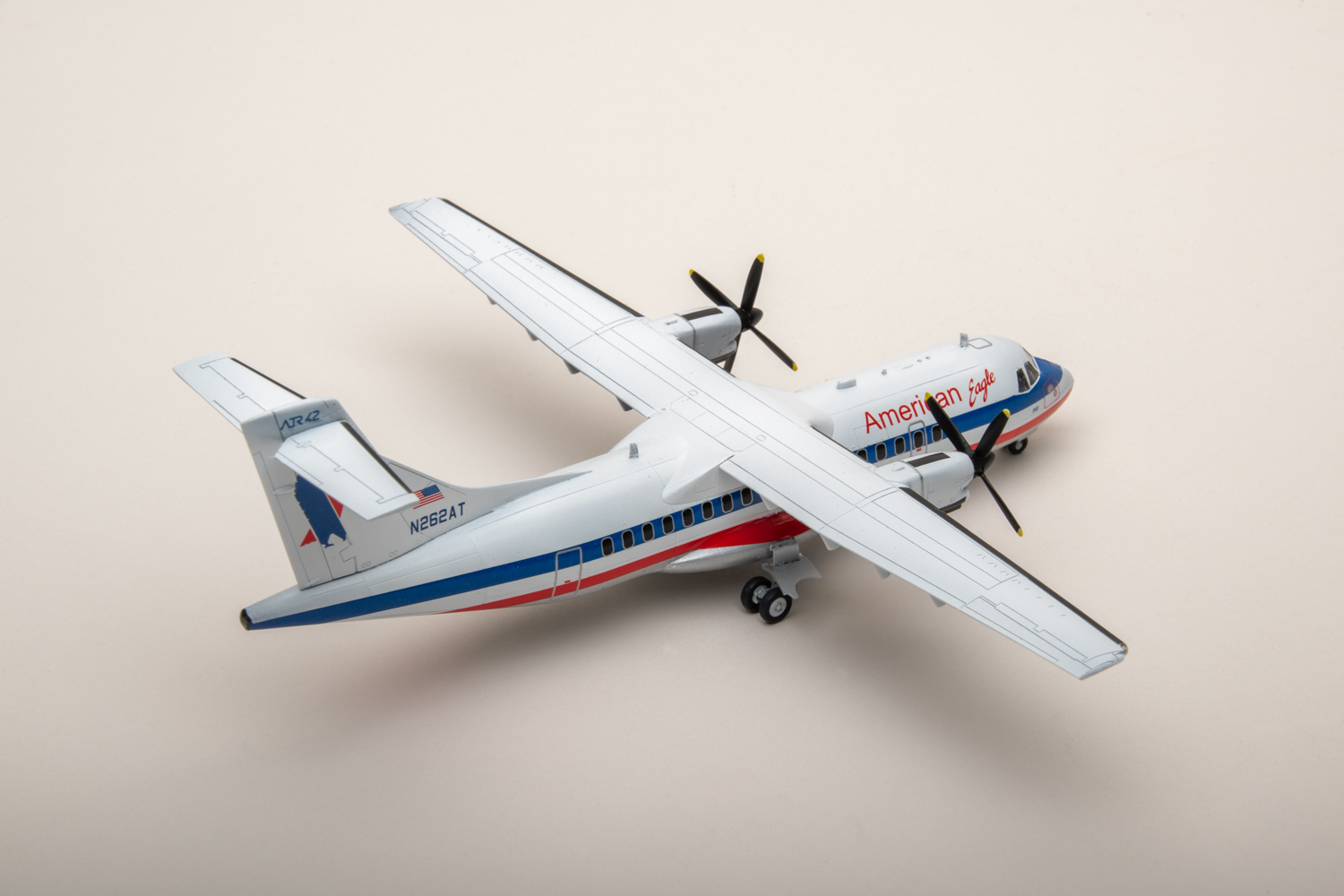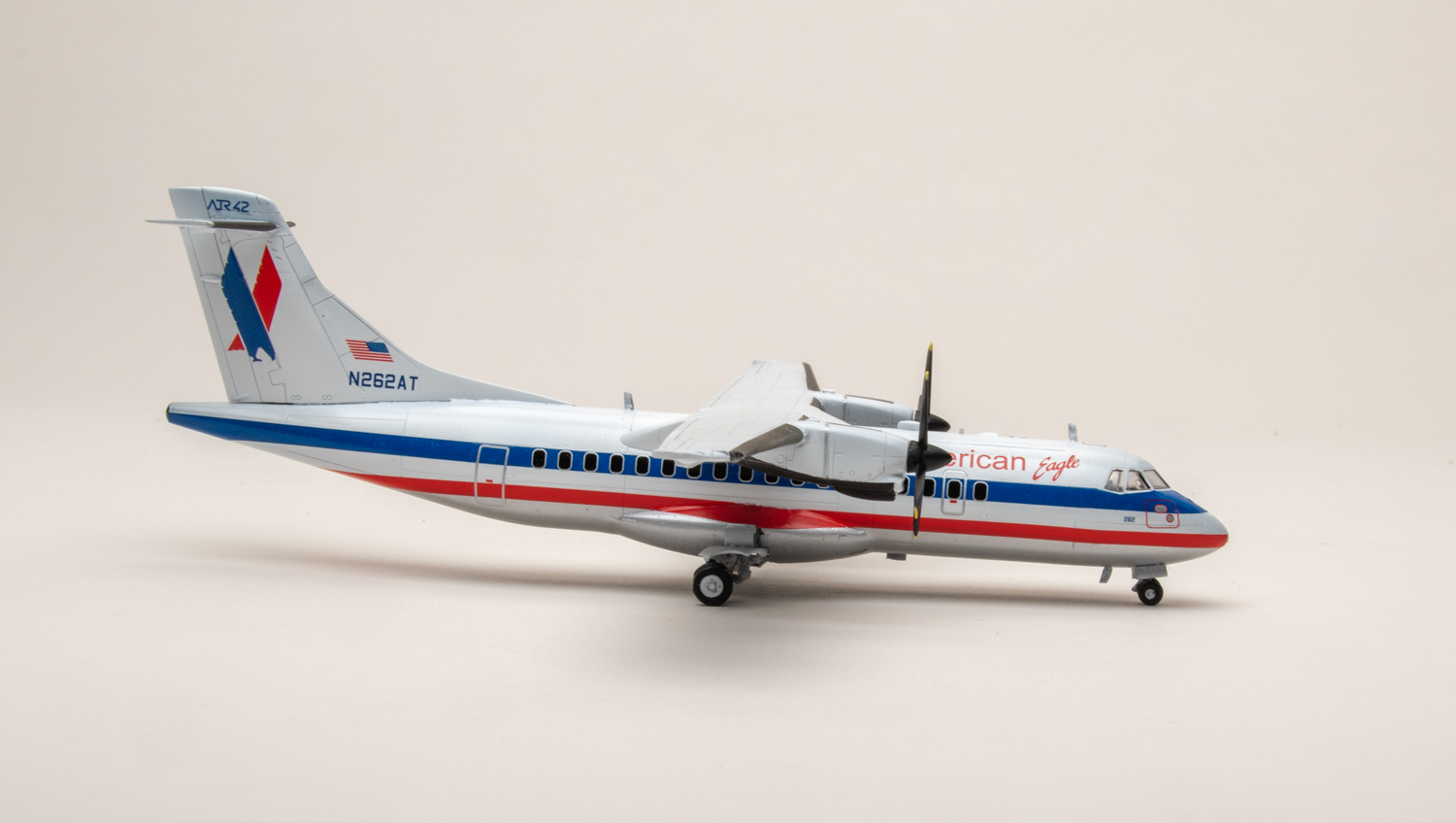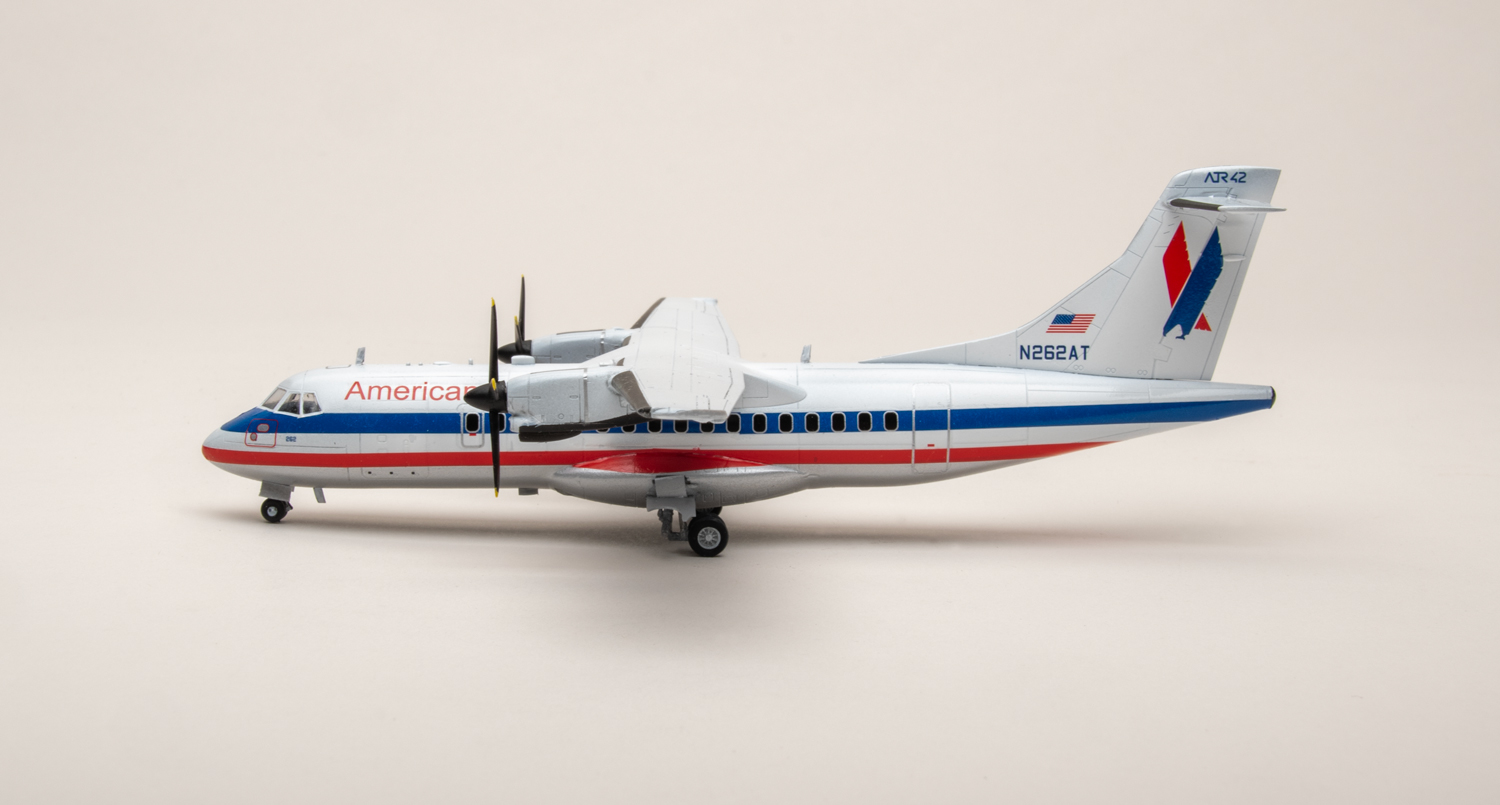
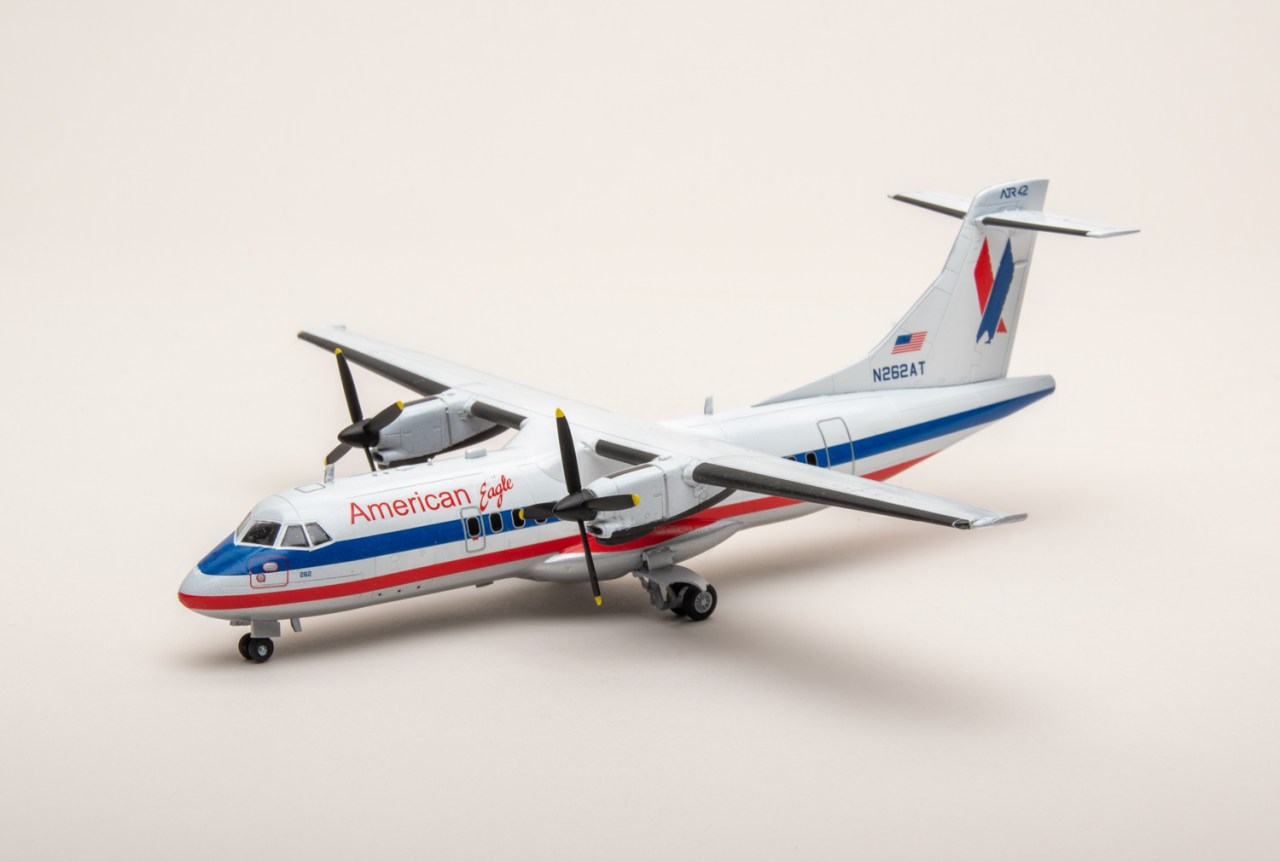
Resulting from an agreement between the French manufacturer Aérospatiale and the Italian manufacturer Aeritalia, the ATR-42 combined concepts from the AS 35 and AIT 230 designs for a regional airliner to compete with the British HS.748 and the Fokker F-27. This venture also resulted in the formation of the ATR Corporation The original design — designated “42” because its standard design seated 42 passengers — has been progressively upgraded and modified with more powerful engines, glass cockpit, six-blade propellers, and with the ATR-72 model, a stretched fuselage.
Suitable for all-weather operation with deicing boots on its wings and horizontal stabilizer, the ATR series also employs the unique feature of a propeller brake on the starboard engine, allowing the engine to run on the ground with the propeller stationary. That supplies electrical power and self-sufficiency in ground operations without the need for an APU.
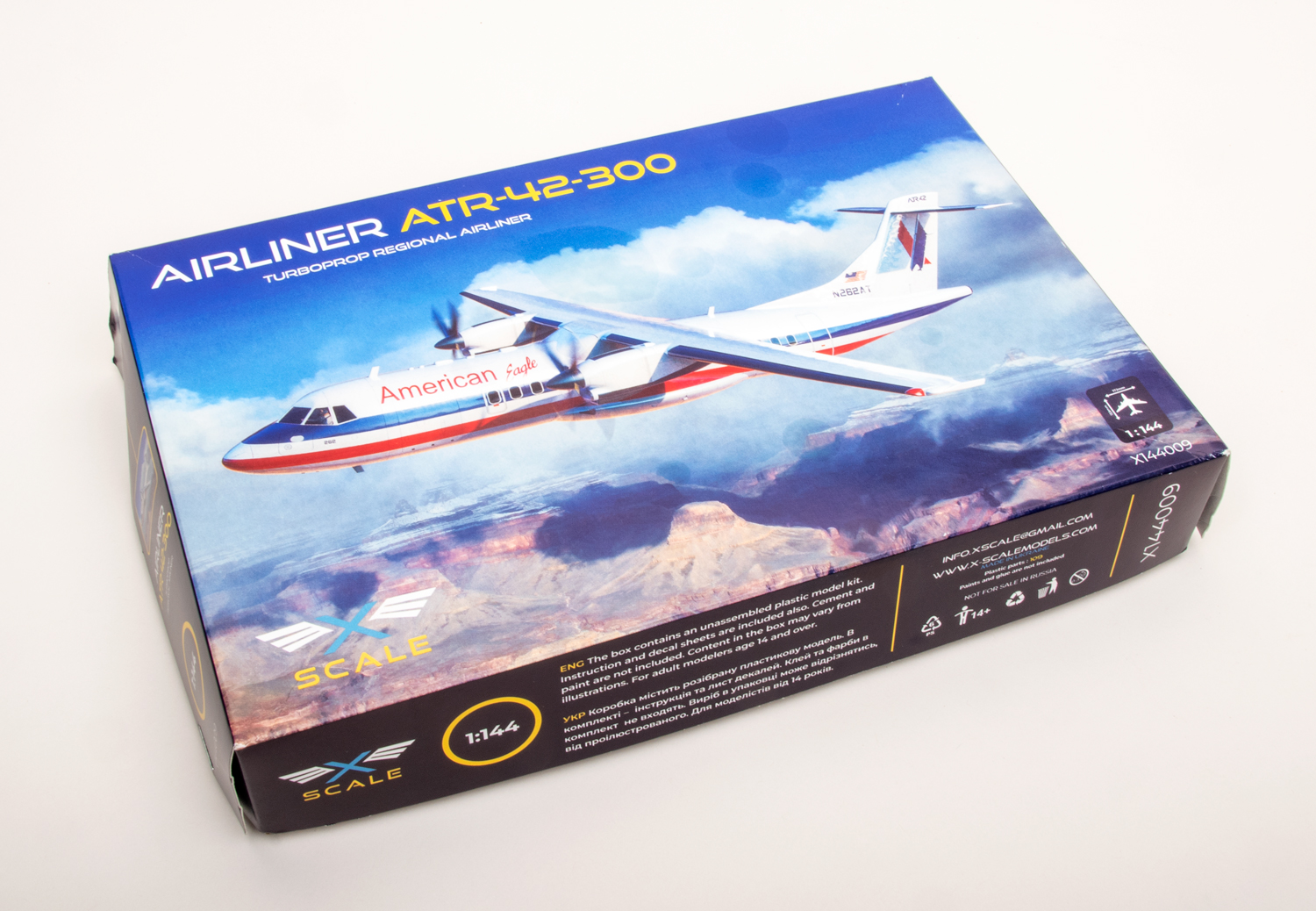
The X-Scale 1/144 scale ATR-42-300 plastic model kit comes molded in gray plastic with crisply detailed parts, many of which are mighty tiny in 1/144 scale. An option is given for the propellers: two four-bladed ones, which I chose, and eight two-bladed ones to assemble both props in the feathered position. Fourteen parts make up a pretty nice, tiny flight deck. The kit supplies a nice set of masks for the cockpit windows and wheel hubs.
The fuselage has no alignment pins or locators, relying instead on interior structure to provide accurate joins. The flight deck, forward bulkhead, nose wheel well, and main wheel well insert accomplish that. The small dorsal antenna farm behind the cockpit is one piece and did a fair job of aligning that part of the body halves when joined, but smoothing the seams around the little antennas was tedious.
While the kit is nicely molded, trimming various parts was needed in order for them to seat properly. Two such areas were the wing-to-fuselage join and where the clear part attached to the forward fuselage.
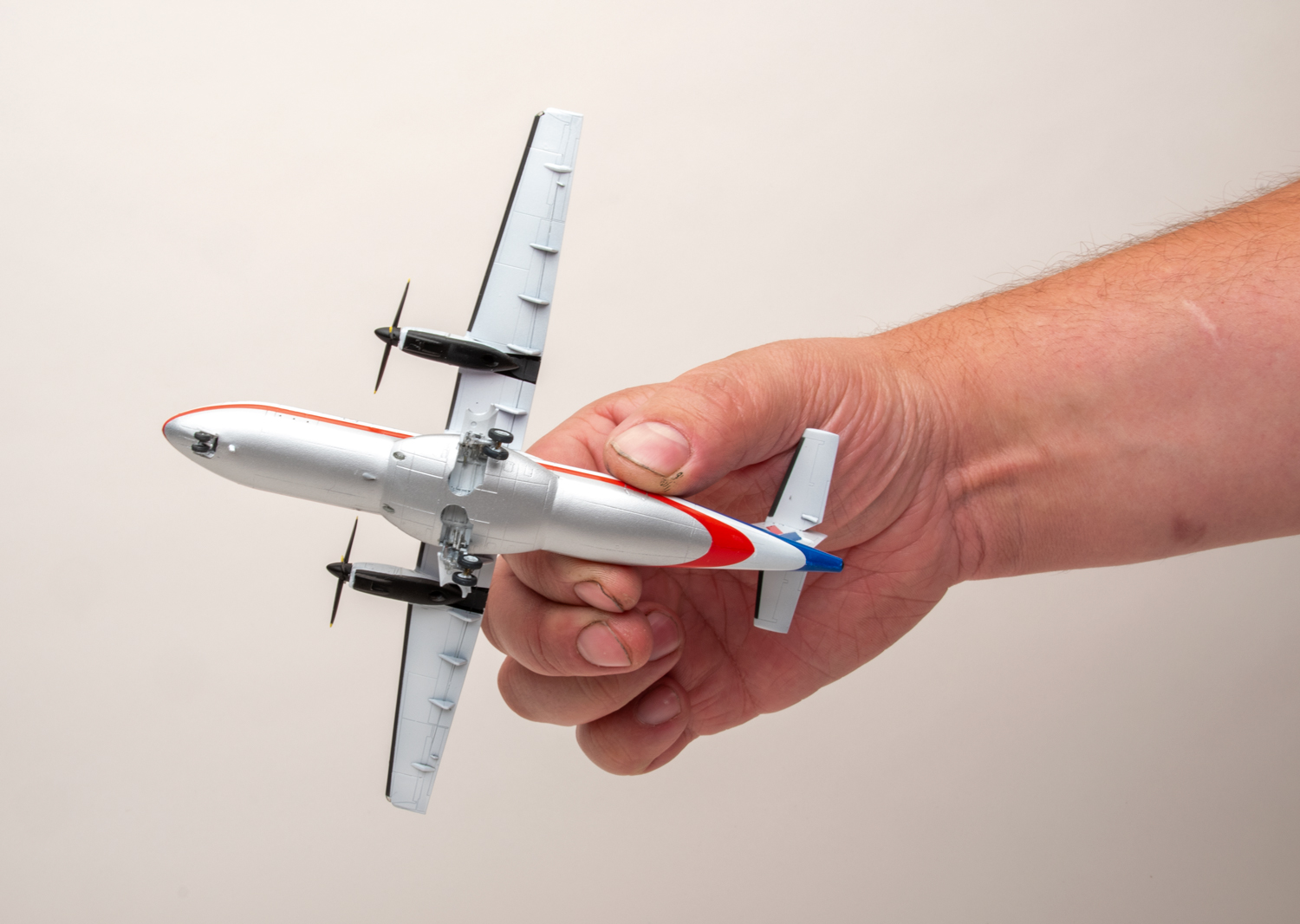
The four-piece nose strut must be installed in the wheel well before the body halves are joined, and with its fragile nature, I worried about breaking it off the entire time I spent on the kit. The four-part main wheel well assembly is a critical part and must be installed in the belly bulge accurately, because the main gear trunnions are on the outboard ends of the assembly and have to fit into the fuselage confines. I had problems with that and fitting the belly bulge to the fuselage opening. This, in turn, caused me difficulty down the road attaching the main gear struts at the correct angles.
The landing gear was the kit’s weak point. The small nature of all the parts necessitated tweezers and a steady hand to put them together. They were hard to hold and clean up, and the instructions were a little vague on where the MLG drag braces and retraction struts were to fit; there were no locators in the wheel wells for those. The main gear doors are three-part assemblies and a reference diagram would be really helpful for how they fit on the real aircraft because there’s too much play with the model’s parts to get them all assembled at the correct angles. I found an ATR-42 walkaround online indispensable.
Color callouts list four paint lines, and I opted for the appropriate Mr. Color and Tamiya acrylics. The belly is specified to be silver, but from photographs, it looks to me like the real aircraft has light gray undersides. Not having proof of that, I went with the indicated silver.
The matte-finished decals are for a single American Eagle aircraft and were a fine feature of the kit. They fit the model, were easy to apply, and black decals are provided for the cockpit windows if the builder chooses not to display the flight deck. Landing lights and navigation lights are separate parts and extremely minuscule. A dab of clear epoxy might be easier than fitting them to the model.
The X-Scale 1/144 scale ATR-42-300 plastic model kit is a precision kit whose tiny parts gave me problems in handling, cleanup, and gluing surfaces. The last resulted in a fragile finished project. I spent a good 40 hours constructing my ATR-42-300, with tweezers in hand, magnifiers over my eyes, and lots of patience. I’d recommend the model for experienced builders.