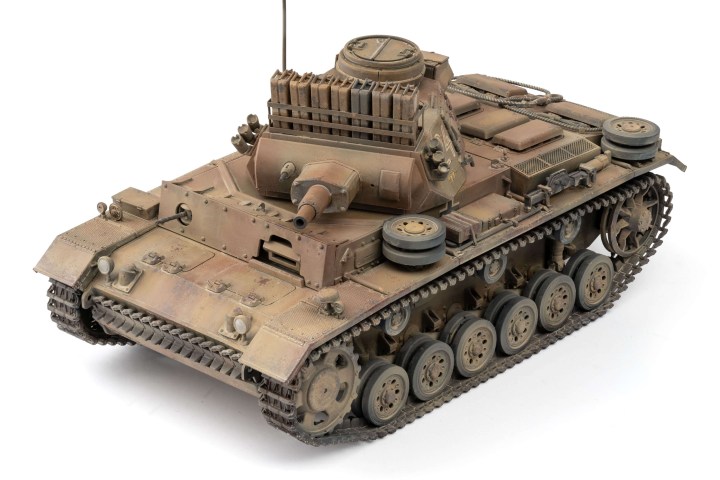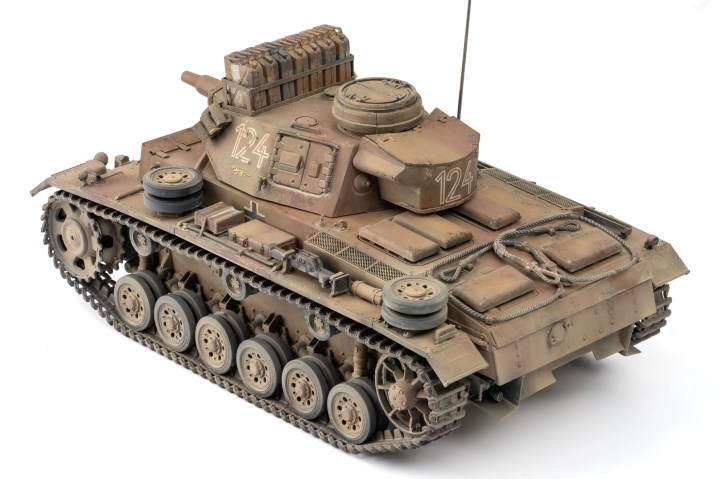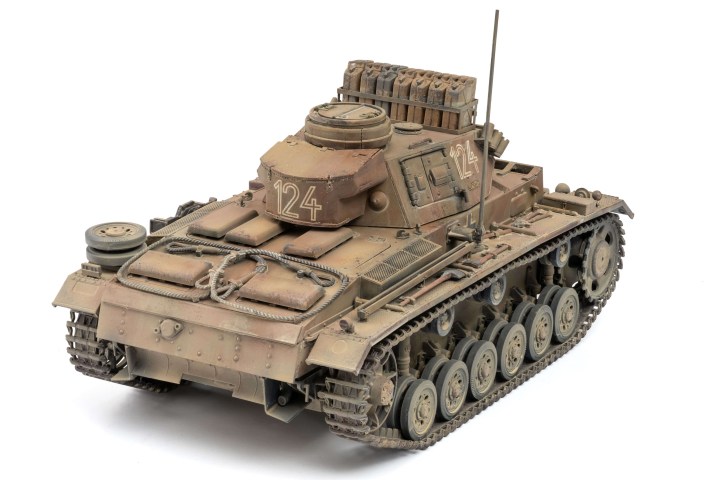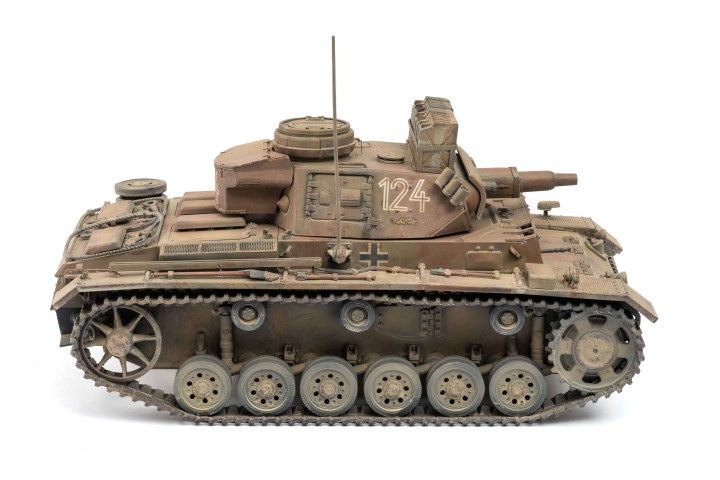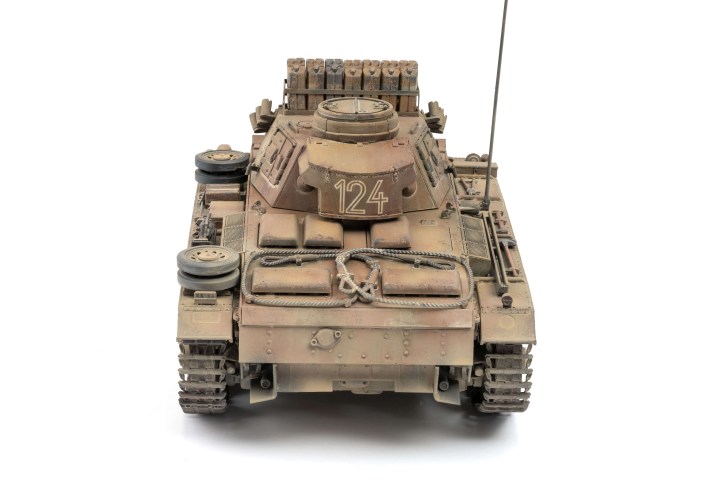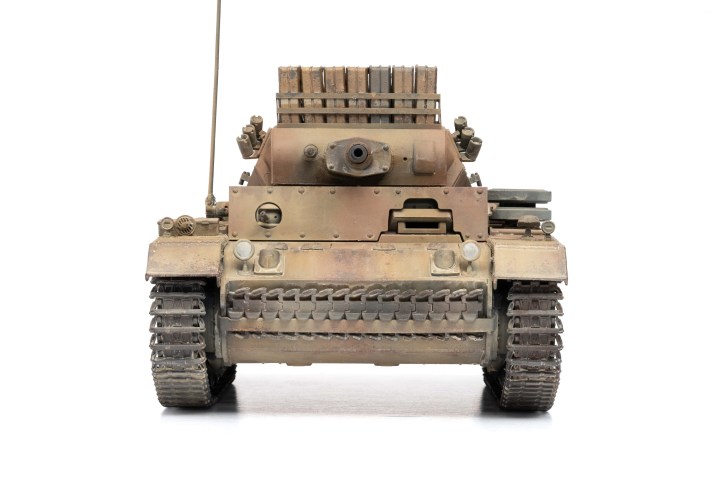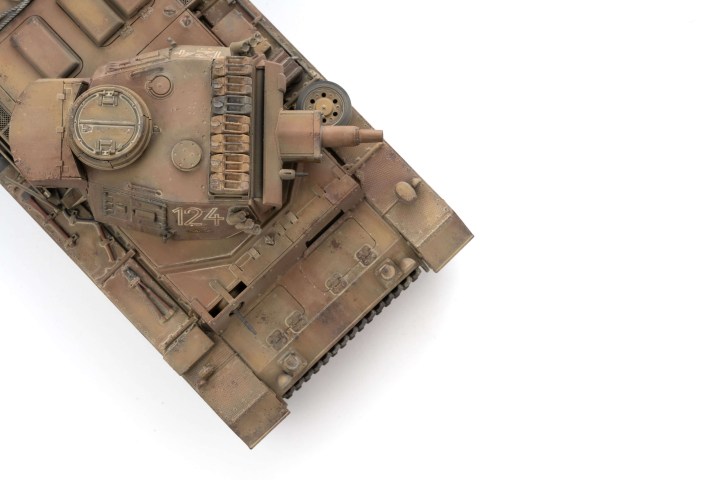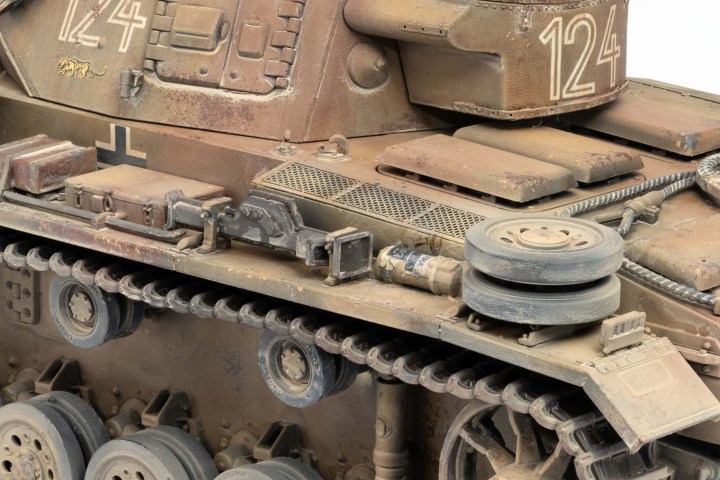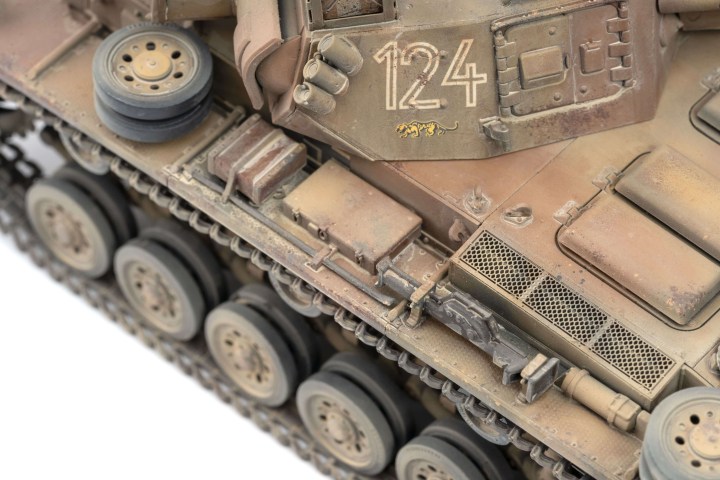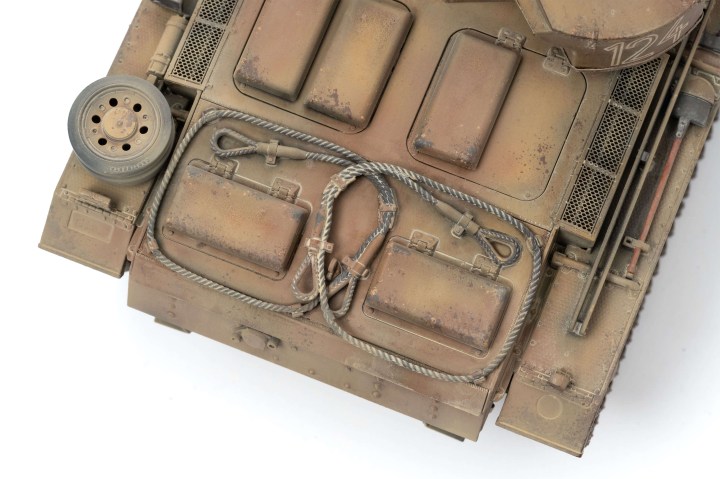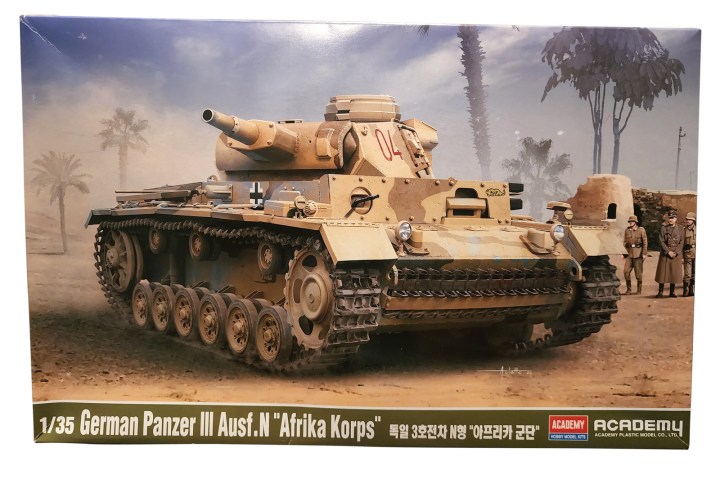
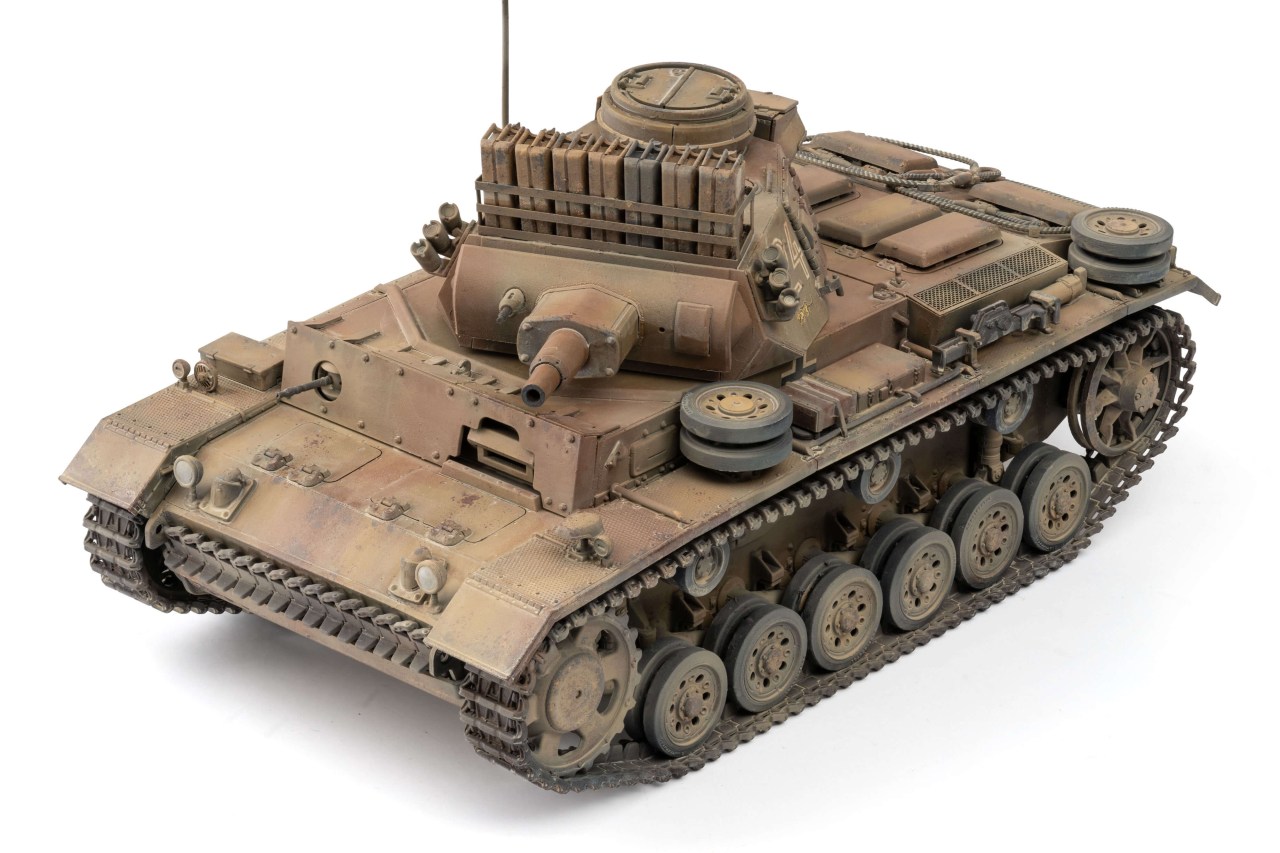
The Academy 1/35 scale Panzer III Ausf N Africa Korps plastic model kit arrives as the third variant in the company’s growing Panzer III lineup. The N was the final production variant of the Panzer III, re-armed with a short 7.5cm KwK 37 L/24 howitzer — the same weapon used on early Panzer IVs — to provide close infantry support. It saw extensive service in North Africa with schwere Panzer-Abteilung 501 in Tunisia and on the Eastern Front at Kursk. Academy covers both theaters with five marking options in this kit.
The kit includes approximately 685 plastic parts across multiple dark yellow sprues and a small photo-etched metal (PE) fret rounding out the package. Academy has covered all of the variant differences among the five marking options. The correct exhaust systems, side skirts, and North African-specific fixtures are all present in the box. The PE covers all the engine deck and air-intake screens — no aftermarket sets required here!
The instructions span 25 steps across 22 pages and include a paint table referencing 13 different paint lines — though frustratingly, Tamiya is not among them. Sprue layout diagrams and five color profiles showing four side views for each marking option round out the package. The line drawings are clean and easy to follow, but given the significant differences between the marking options — skirts versus no skirts, different exhaust systems, and North African-specific details — I would strongly recommend reviewing all the steps and flagging the parts relevant to your chosen option before you pick up any cement. Missing a step early on can create real headaches later.
Unlike many tank kits, there is no hull tub here. The chassis is built up from individual panels, but Academy provides solid reinforcement pieces and alignment slots that make it straightforward to get everything square. Assembly follows a logical sequence, working from the chassis and running gear outward before finishing with the turret. The engineering is well conceived throughout.
Part fit is excellent across the board, and I had no fit issues anywhere on the model. The tracks are a mix of individual links and a longer run for the bottom, which I enjoyed working with. I followed the assembly process laid out in the instructions, including adding the running gear and tracks before painting. It did make painting a little more difficult, but I find it’s easier than trying to add the tracks after everything is painted.
Painting this kit led me on a small detour. I initially tried the AK Interactive colors referenced in the paint table, but found them completely wrong for the subject. I fell back on Tamiya Desert Yellow and Khaki, guided by a YouTube video focused on North African Panzer III colors. For detailed brushwork on smaller parts, I turned to Vallejo paints, where I find the consistency gives me better control. The kit decals were a genuine highlight: they went down without any issues and even included the fire extinguisher placard — a detail I have not seen in any other kit I have built.
On the finished model, Academy’s dimensional accuracy holds up well against measurements reported in Panzer Tracts No. 3-3. The molding quality is solid; even on the side skirts I chose not to use, the edges are beveled to accurately simulate scale thickness. The one area where I would take issue with Academy is that the tracks lack hollow guide horns — a noticeable omission up close. Clear headlight lenses would also have been nice. If I were to build this kit again, I would swap in aftermarket tracks with hollow guide horns and replace the headlight lenses with clear parts.
The build and painting took approximately 24 hours — about average for a kit of this complexity. I would recommend this Academy 1/35 scale Panzer III Ausf N Africa Korps plastic model kit as a great choice for a modeler who has a few builds under their belt. The engineering is friendly and the fit rewarding, but the link-and-length tracks and the need to navigate multi-variant instructions will be more comfortable for someone with a little experience building kits.
Photos by Kyle Nelson