Rolltex launched in 2019 to create a tool to help professional sculptors and modelmakers reduce the time required for texturization and detailing their work under tight deadlines. The company first concentrated on skin and fur textures, produced by applying a roller to a soft surface like clay or epoxy putty. As other lines took off, they were asked if they’d be interested in making a product for the miniatures market, specifically for 28mm to 54mm scales — perfect for models roughly 1/64 scale to 1/32 scale.
As someone always looking for a new tool to use, the new Rolltex Mini Series textured roller looked perfect for quickly making bases for figures or even small vignettes. And you know what? It is!
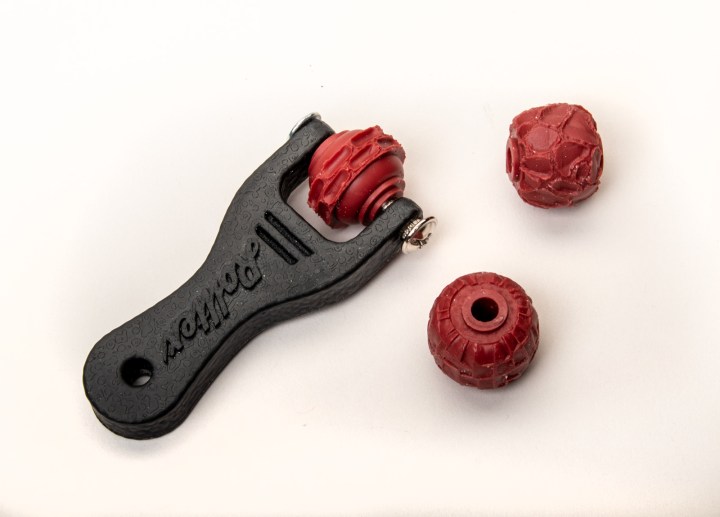
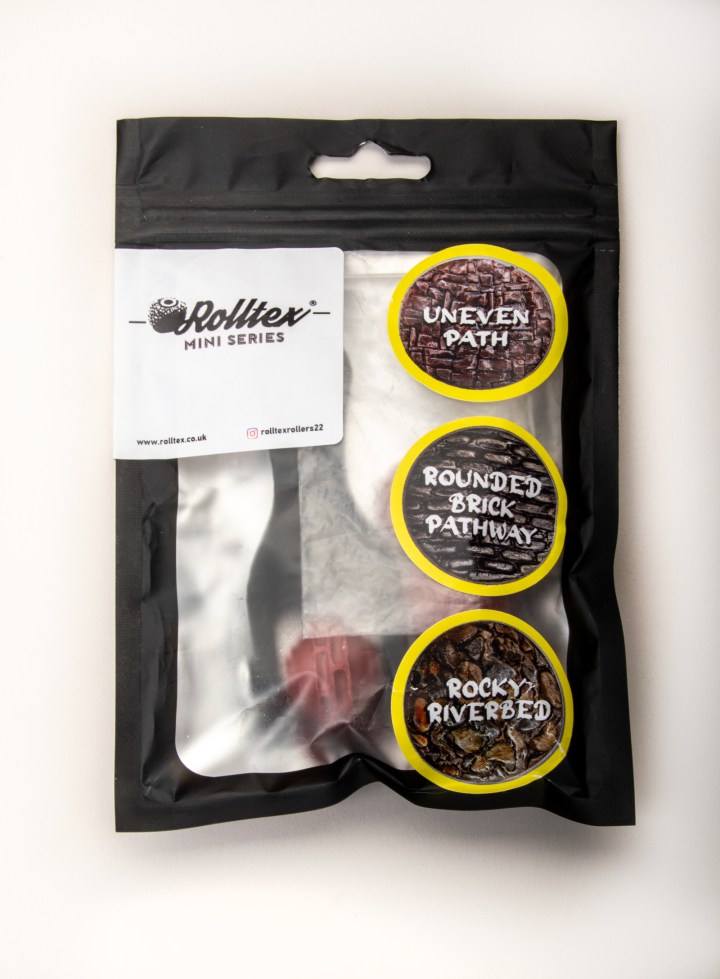
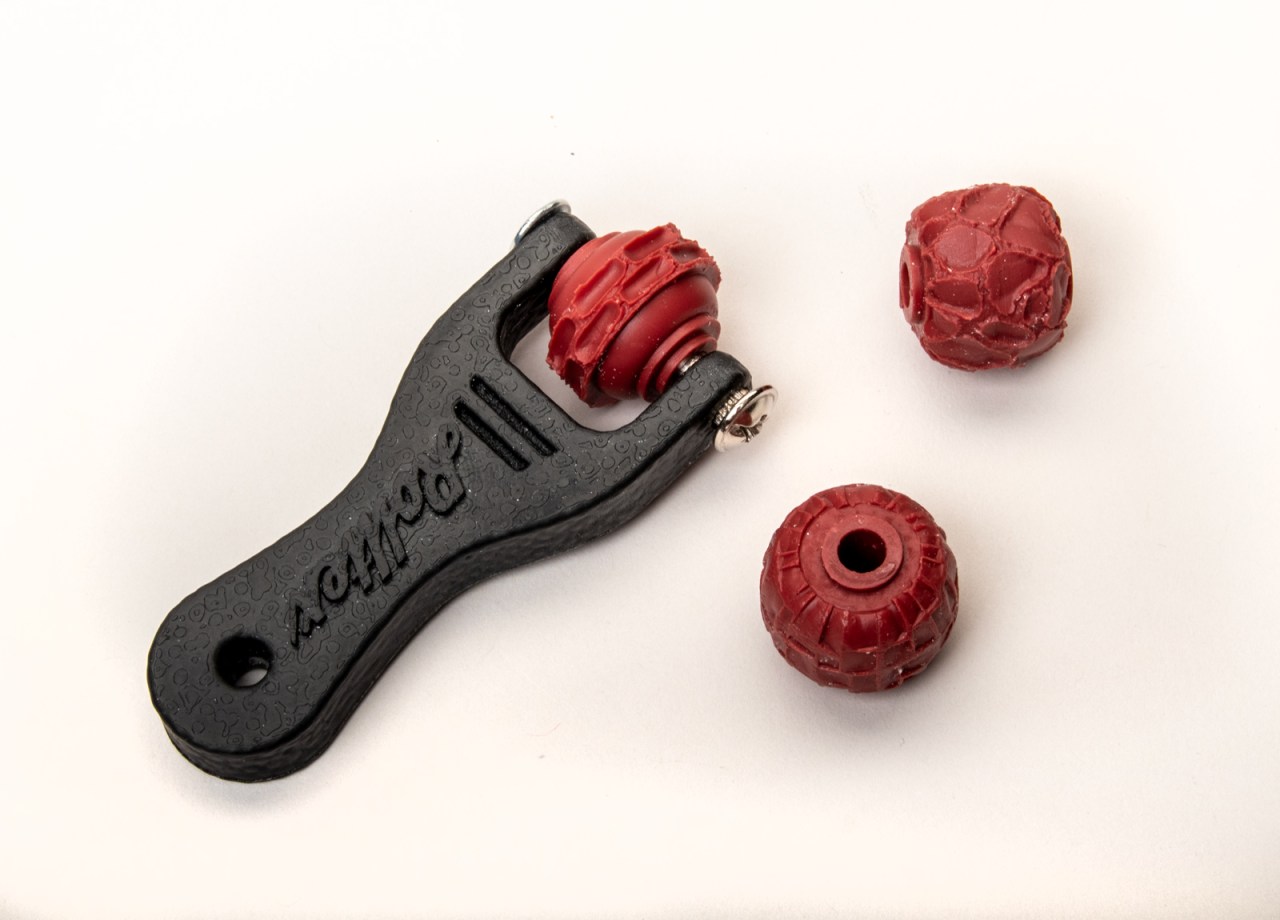
In the resealable pouch, you get a handle and three interchangeable texture rollers: Uneven Path, Rounded Brick Pathway, and Rocky Riverbed. Both the handle and the rollers are made from durable engineering plastic. You change out the rollers on the handle via a light, two-part stainless steel axle that you unscrew to remove. Your fingernail is really all you need to remove the screw, but a standard or crosshead screwdriver will work if you’ve cranked it tight.
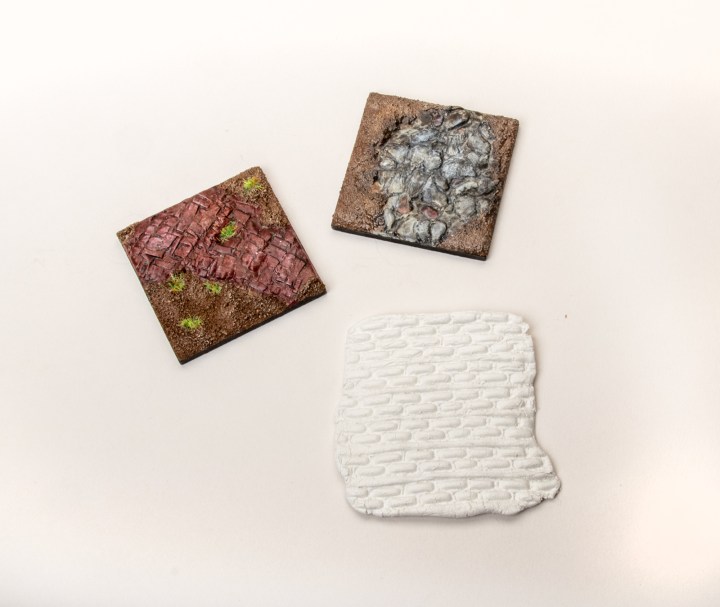
I tested the rollers on a number of products, including DAS modeling clay, Green Stuff and Milliput two-part epoxy putties, and Activa CelluClay. The rollers woked perfectly on the modeling clay and two-part epoxies. One thing to keep in mind is distortion, particularly when using the Rounded Brick roller. You’re probably looking for straight lines for those bricks. However, as you push the shape into the clay or epoxy putty, the movement and pressure squishes the medium. Also, you’ll want to take your time to make sure you’re lining up the brick passes so the roller runs over a mortar seam rather than through other bricks or leaving a gap between courses.
The issue with distortion and lining up your passes is less problematic for the Uneven Path and Rocky Riverbed. Because the textures you’re creating are naturally, well, uneven. So if you happen to run over a portion you’ve previously imprinted, it looks fine. In fact, doing this can help disguise repeating rock shapes that might be too close together.
The rollers didn’t work well with CelluClay. At first, the mix was too loose and it was like pushing the rollers through mud. As it set up, the medium became sticky, so it would cling to the rollers. I tried putting down plastic wrap and then rolling the textures, but the results were indistinct. I waited for the CelluClay to set up, but then it became to hard to work. There just didn’t seem to be a point that the rollers would interact well with CelluClay, which limits their usefullness on larger diorama projects to smaller portions, for instance, exposed brick in a plaster-covered wall.
Overall, I am impressed with the Rolltex Mini Series textured rollers. They did exactly what I expected them to do, and I can see how they could make basing your miniatures or vignettes a much quicker process — and I love saving time almost as much as I like new tools. As I often ask, do you need the Rolltex textured rollers at your workbench? No, but it could prove useful if you do, especially for figure modelers.