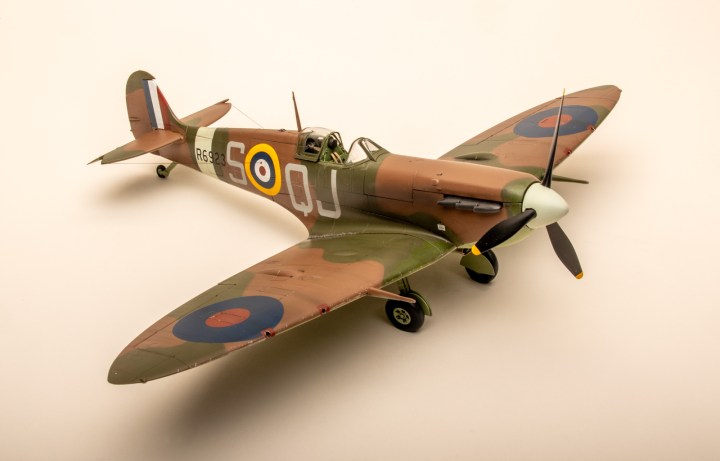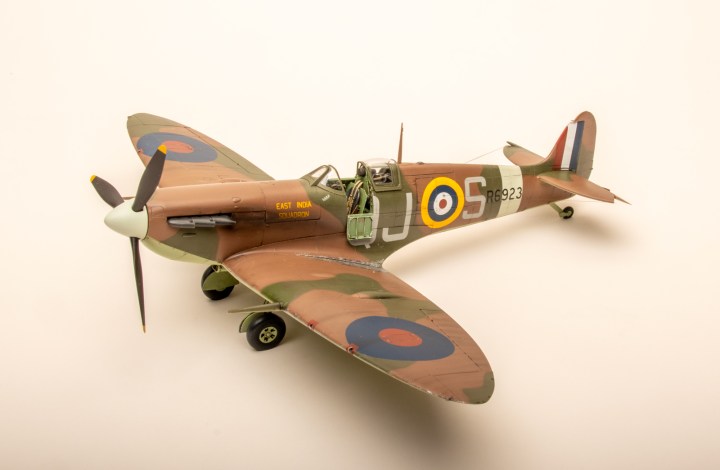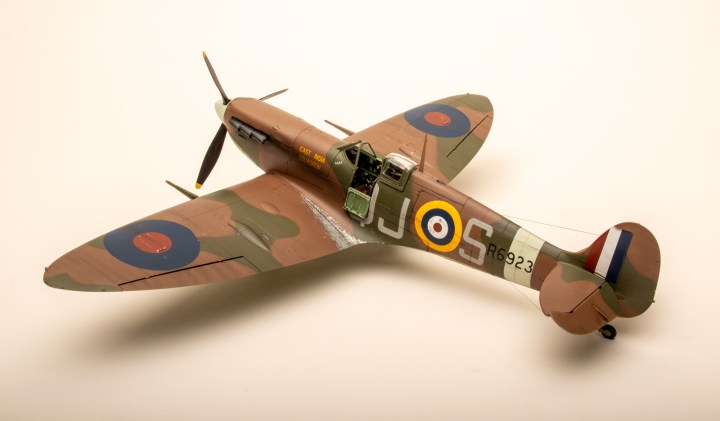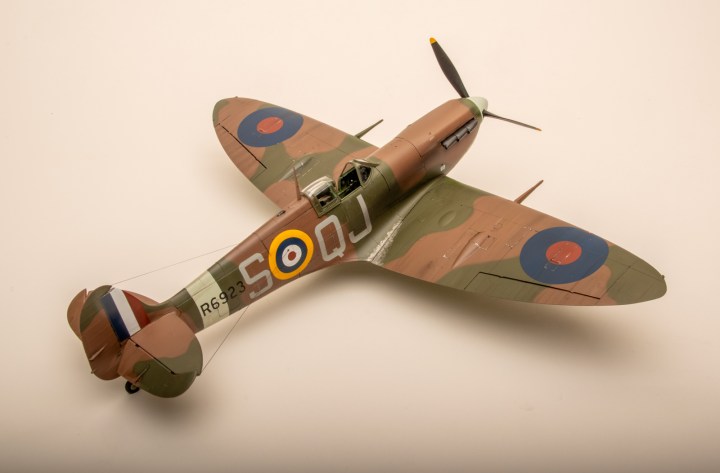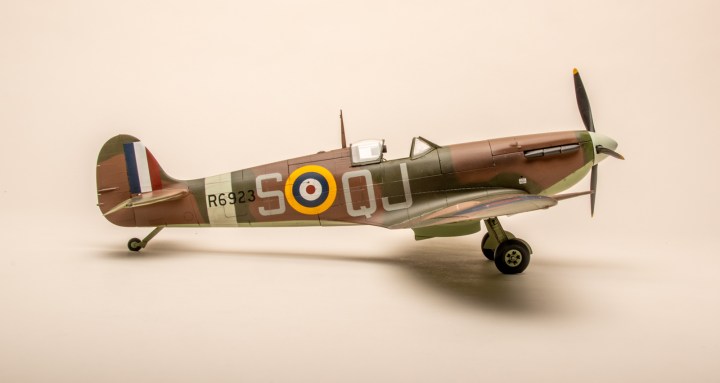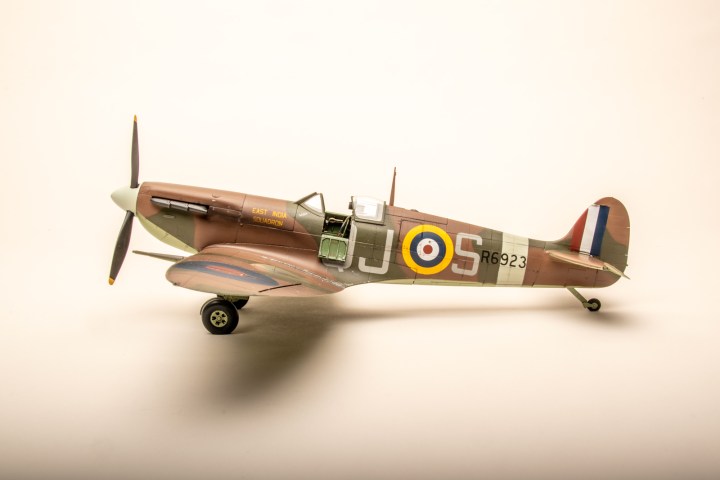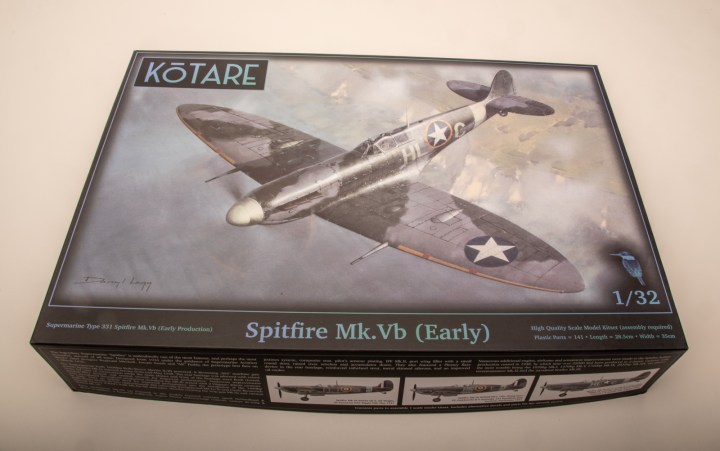
The new Kotare 1/32 scale Supermarine Spitfire Mk.Vb (Early) plastic model kit was designed with all modelers in mind, including novice and inexperienced builders. The parts breakdown is supposed to provide a quicker, easier build, and we at FSM wanted to put that to the test. I am not normally an aircraft modeler; armor and sci-fi are my jam. This would only be my third 1/32 scale airplane, so, yes, experienced modeler, but not at all a plane person.
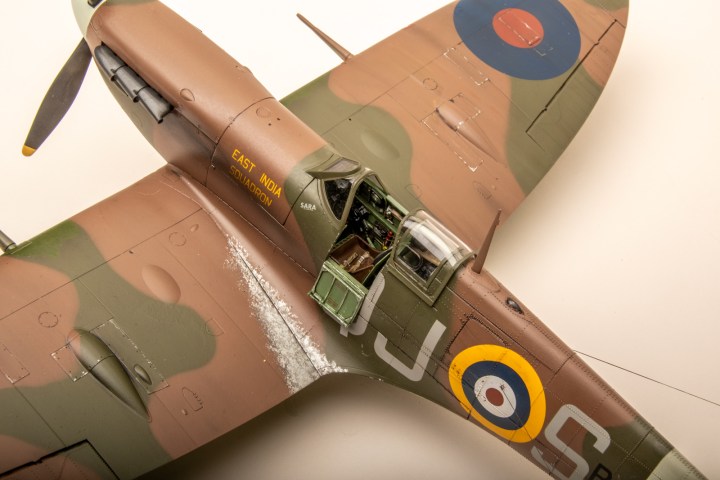
I love the layout of the large, 32-page, full-color instruction manual. From what I understand, this is the norm with Kotare kits (an approach held over from Wingnut Wings). Construction started with the cockpit interior, and the first thing I saw in the manual was a full-page image of the interior to refer to while building. Nice! Details on the interior are crisp, with scale-correct rivets and gauge bezels. Part fit was perfect; everything went exactly where it was supposed to go and did so smoothly.
The instructions offered callouts where you can add extra details, like drilling holes in the frame visible behind the seat. These hints also provide drill bit sizes for each hole. There are also rigging diagrams if you want to run control lines. I did drill out all the holes and run the control lines, although I couldn’t see much of the work when it was all closed up. I always enjoy the chance to add extra to my models, and I know it’s there, right?
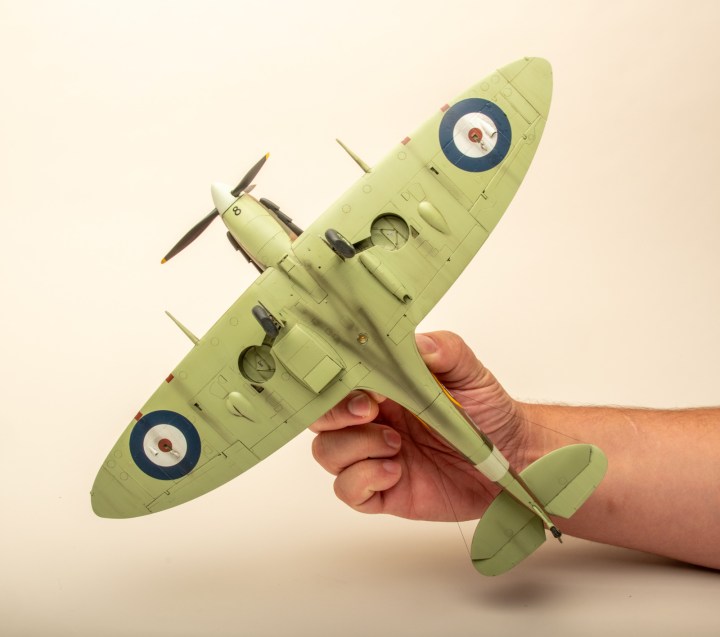
The fuselage construction also went smoothly. Seams were engineered to run along actual panel lines, which meant there was nothing to clean up. The wings are comprised of a single main lower wing, a wing spar, and port and starboard upper-wing halves. The wing roots matched to the body precisely and needed no filling or work. Even the fillets met perfectly. (Fact: I didn’t use any filler on the whole model.)
The elevators are positioned drooped in the kit, but you could remove or change the locators to position them differently. The ailerons are positioned neutral, but again, you could change that with a little work.
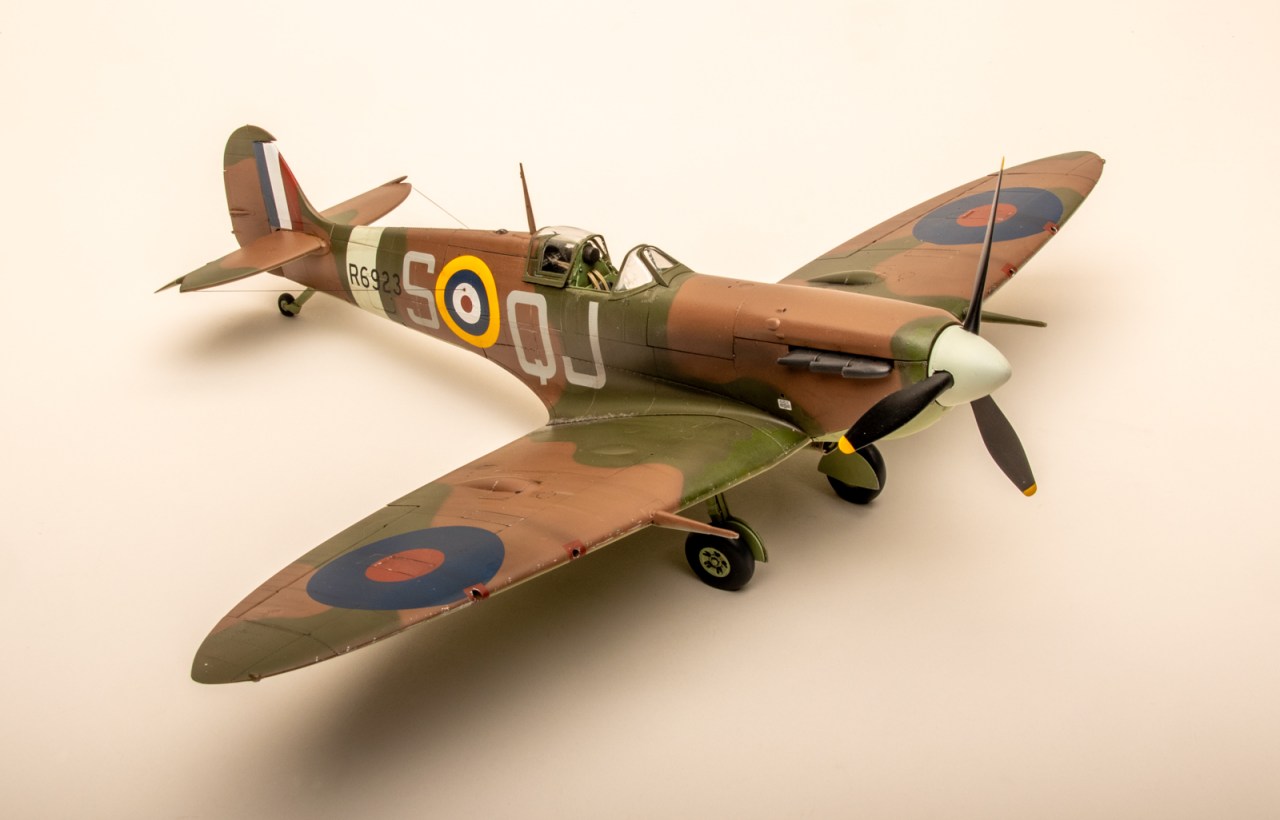
When it comes to painting, all the reference photos came in handy. The instructions included 13 pages of reference images, some full-color rendered images and other black-and-white photos of aircraft in service during World War II. The amount of detail Kotare has gone into here is incredible, with a raft of callouts and tags for areas to look out for. I chose to finish my Spitfire as R6923 flown by Allen Richard Wright in May 1941. It had the most weathered appearance of the three marking options included in the kit, and it was the only one in green and brown paint (ah, yes, my armor modeler is showing). I used Tamiya acrylic paints for the airbrush work and Vallejo acrylic colors for brushed details, mainly in the cockpit.
The Cartograf decals went down nicely. I found the combo of Micro Sol and Micro Set worked the best. I did have the large roundels wrinkle from the setting solution (which is expected), but it took longer than I was used to for them to settle down. A bit worried at first, they did tighten up after a few hours and looked great. So, if you have the same experience, trust the process.
Now comes the single issue I had with the whole build: the canopies. I wanted to use the open canopy on the finished model, so I used the old trick of temporarily tacking the closed canopy in place as a mask during painting. The canopy was slightly too narrow at the base and scale thin. While trying to fit it in place, it cracked down the center. Because I was using it as a mask, that was fine, but I had the same issues after painting when attaching the open canopy parts. I managed to get them to fit and hold without breaking them. I turned to superglue at each of the corners of the rear canopy to keep it attached.
Building a Wingnut Wings kit has been a long-held desire, and I’m glad some of the crew were able to move on to Kotare. I took on the Kotare 1/32 scale Supermarine Spitfire Mk.Vb (Early) plastic model kit expecting great detail and an enjoyable build, and it definitely didn’t disappoint. The kit’s detail is fantastic, and the instruction manual is almost a reference book all on its own; it has so much information in it, it’s worth keeping on your bookshelf. After spending about 15 hours building and about 26 hours painting, I feel like Kotare accomplished its goal of a highly detailed and accurate Spitfire that even modelers who don’t have extensive aircraft building and painting experience can tackle and still end up with an exceptional model.